Please click here to check who's online and chat with them.

Find Verified Heat Exchangers Suppliers, Manufacturers and Wholesalers

GOLD Member
VERIFIED
Sep-05-23

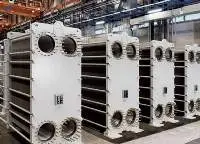
High Quality Stainless Steel Heat Exchangers, Grade A

$1.50K - $5.00K / Metric Ton (FOB)
MOQ: 10  Metric Tonnes
Sample Available
 Inquire Now  
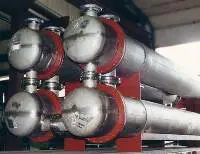
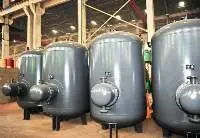
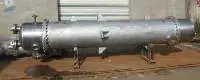
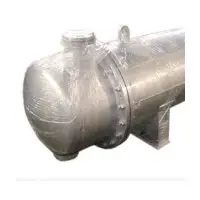
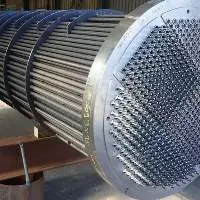
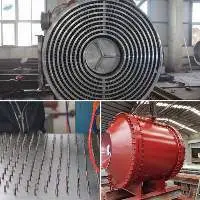
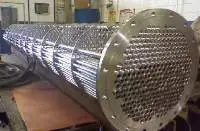
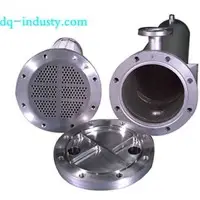
We supply specialized  manufactured Shell amp Tube Heat Exchangers amp Pressure Vessels Delivering superior quality products in minimum delivery time MOC we can supply in copper brass carbon steels stainless steels like SS304 SS310 SS316L copper alloys such as cupro nickel Admiralty amp Aluminum Brass and many other materials We can supply Heat Exchangers amp Pressure Vessels up to 40 Tons
The product range includes the proprietary plate fin tube heat exchanger oil coolers inter coolers after coolers marine heat exchangers oil cooling systems condensers chillers economizers super feed heat exchangers receivers and surge drums
This products are extensively used in oil and gas refineries air separation plants chemical steel refineries pharmaceutical industries air conditioning amprefrigeration plants heat treatment shops marine engines amp gear boxes induction furnaces machine tools diesel engine generating sets compressors power plant installations transformers hydraulic power packs food processing vegetable oil refining amp sugar industry etc
We are supplying this with certifications such as U R amp NB Stamp from ASME ISO 90012008 quality certificates from LRQ  and certifications from DGQA IRS NSIC etc
This are all manufactured in Nondestructive testing such as
Visual Inspection
Liquid penetrant testing
Radiographic testing
Tube to Tube sheet Weld radiography
Ultrasonic testing for raw material and welds
Helium leak testing
Bubble Leak testing
Magnetic particle testing
GOLD Member
VERIFIED
Jul-03-26

Brazed Plate Heat Exchanger, industrial

$100 - $500 / Piece (FOB)
MOQ: 50  Pieces
Sample Available
Supplier From Pune, Maharashtra, India
 Inquire Now  
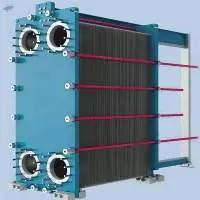
Type : Brazed Plate Heat Exchanger (Compact Plate Type)
Material (Plates ) : Stainless Steel 316L / 304
Brazing Material : Copper (99.9%) or Nickel (high corrosion resistance)
Design Pressure : 3.0 - 4.5 MPa (30 - 45 bar)
Test Pressure: Up to 6.7 MPa
Design Temperature: -196C to +225C (some models up to 232 C)
Flow Capacity : 1 m/h to 100+ m/h (depends on model size)
Heat Transfer Efficiency : Very high (turbulent flow channels)
Connections : NPT threaded / BSP / flange / solder
Leak Tightness : Vacuum brazed, no gaskets
GOLD Member
Aug-23-23
 Inquire Now  
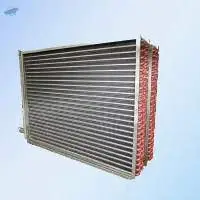
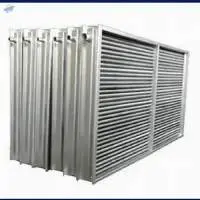
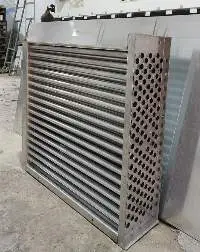
Material Aluminum
Grade AISI
Color Silver

Voltage 220V
Power 1-3kw
Driven Type Electric
Warranty 1 Year
Automation Grade Automatic
Aug-01-24
 Inquire Now  
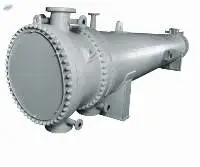
Shell and Tube Heat Exchanger
Feb-07-23

Pure Finned Tube

$10
MOQ: 100  Meters
Sample Available
 Inquire Now  
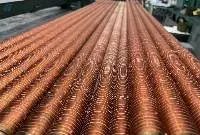
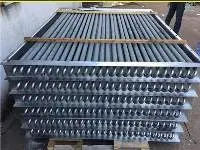
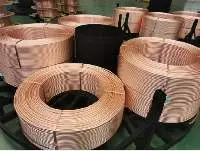
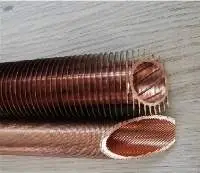
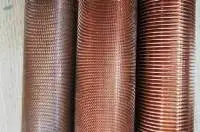
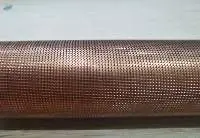
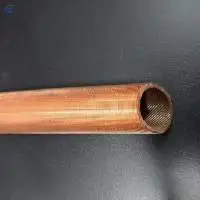
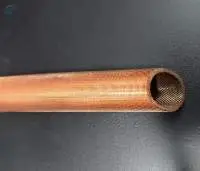
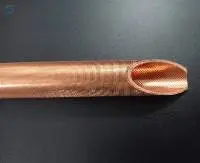
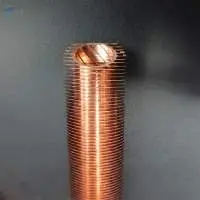
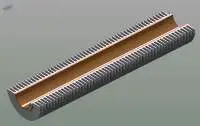
Copper finned tube is a heat exchange element. In order to improve the heat exchange efficiency, fins are usually added on the surface of the heat exchange tube to increase the external or internal surface of the heat exchange tube), so as to achieve the purpose of improving the heat exchange efficiency. The overall finned tube has no contact thermal resistance, good heat transfer performance, high strength, thermal and mechanical vibration, and good thermal expansion performance.
1442 Heat Exchangers Suppliers
Short on time? Let Heat Exchangers sellers contact you.
Nov-01-22
 Inquire Now  
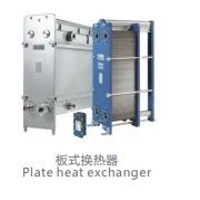
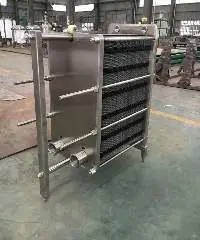
Stainless Plate Heat Exchanger:

1. Structural characteristics of stainless steel plate heat exchanger

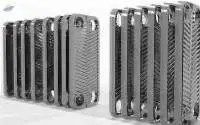
Stainless steel plate heat exchangers are mainly divided into flat plate heat exchangers and plate heat exchangers. The main advantages are reflected in the characteristics of easy disassembly, good cleaning, convenient maintenance, small size and small footprint.
There are also many people asking whether to add an insulating layer. The heat loss of the stainless steel plate heat exchanger in the air is 1%, and the insulating layer is basically unnecessary.
Second, the characteristics of stainless steel plate heat exchanger plates
The stainless steel sheet is mainly formed by one-time stamping. What are the main advantages of doing so?

1. The corrugation depth of each plate is the same to ensure that each contact point can be well connected.

2. The weight of the heat exchanger equipment can be reduced, and a higher heat transfer coefficient can be obtained under the requirement of being able to withstand pressure.

3. There is no excessive punching area on the plate, and no invisible cracks will appear.

4. The thickness of the plate can reach 0.3mm.

The plate of the stainless steel plate heat exchanger has a strong pressure bearing capacity, which can prevent the mechanical fatigue caused by the shaking caused by the vibration.

Third, the advantages and disadvantages of stainless steel plate heat exchanger

The main advantages of stainless steel plate heat exchanger are:

1. Scaling is not easy to occur, because turbulent water can effectively reduce the possibility of scaling. To prolong the working cycle, chemical cleaning methods are generally used for cleaning. It can effectively reduce human, financial and material resources. If you are not familiar with the fouling treatment method of plate heat exchangers, you can poke into this article to browse.

2. Compact structure and small size, can be used in multiple places. And the heat transfer is good, and the equipment is light in weight.

3. The speed of the fluid is uniform, and the material is heated during the period of time without overheating.

The main disadvantages of stainless steel plate heat exchangers are:

1. As mentioned above, the thickness of the sheet is thinner and the pressure bearing capacity is lower, especially the contact points formed between the corrugated sheets. With the prolongation of use time, the pressing size will exceed the installation size, which may easily lead to the formation of pressure pits at the contact point, which may lead to perforation and lead to the scrapping of the plate.

2. The space between the plates is narrower and the evaporation time used is shorter. If the hot and cold medium is exchanged between the liquid material and the corrugated plate, if the material is cut off, it will be in a coking state, and the coking material will block the cold material passage and cause damage to the sealing gasket.
Nov-01-22
 Inquire Now  
SEGMENT- Surface cooler
Nov-01-22
 Inquire Now  
SEGMENT- Finned Tube evaporators
Nov-01-22
 Inquire Now  
SEGMENT- Finned Tube Condenser
Nov-01-22
 Inquire Now  
SEGMENT- Gas Heat Exchanger
Nov-01-22
 Inquire Now  
SEGMENT- Finned Tube Heat Exchanger-BIOTECH & PHARMA
Nov-01-22
 Inquire Now  
SEGMENT-Water- Water Plate Heat Exchanger-BIOTECH & PHARMA
Nov-01-22
 Inquire Now  
SEGMENT- Water-Water Plate Heat Exchanger-BIOTECH & PHARMA
Nov-01-22
 Inquire Now  
SEGMENT- Positive Displacement Heat Exchanger-HVAC
Nov-01-22
 Inquire Now  
Inner Grooved Heat Exchanger Tube EN12735 For Heat Interchanging Field
Nov-01-22
 Inquire Now  
Copper Plate Fin Heat Exchanger Tube ASTMB68 GB T19447 Standard
Nov-01-22
 Inquire Now  
CU DHP Heat Exchanger Fin Tube Piping For Seawater Cooling And Distillation
Nov-01-22
 Inquire Now  
Transense Heat Exchanger Tube , 25.4mm Air Conditioner Copper Pipes 1
Nov-01-22
 Inquire Now  
Falling Film Evaporators Heat Exchanger Pipe CU-DHP C12000 Finned Tubing Copper 1
Nov-01-22
 Inquire Now  
JISH3300 Copper Tube Fin Heat Exchanger Semi Hard For Flooded Evaporator 1
Nov-01-22
 Inquire Now  
OD 15.88mm Heat Exchanger Tubing , Copper Finned Tube For Flooded Evaporator 1
Nov-01-22
 Inquire Now  
Washed Surface Heat Exchanger Tube , OD 15.88MM Centrifugally Cast Pipe 2
Nov-01-22
 Inquire Now  
CU-DHP Heat Exchanger Tube Pipe Washed Surface ASTMB68 Standard
Nov-01-22
 Inquire Now  
C12000 Copper Finned Tube Heat Exchanger Compact Design Thickness 0.635mm 1
Nov-01-22
 Inquire Now  
GB.T19447 Heat Exchanger Tube OD 12.7MM For Condenser Washed Surface 1
Jun-05-20
 Inquire Now  
Plate heat exchanger
Jun-22-21
Supplier From Thane, Maharashtra, India
 Inquire Now  
Ss 316 Tube Type Heat Exchanger With Titanium Tubes In Ss 316 Grade
Feb-12-21

Reflective Heat Transfer Vinyls

$3
MOQ: Not Specified
Supplier From Gautam Budh Nagar, Uttar Pradesh, India
 Inquire Now  
Heat Transfer Vinyls
Reflective Stichable Tapes
Aug-07-20
Supplier From Mumbai, Maharashtra, India
 Inquire Now  
Specifications

Type : Automatic
Material : Gun Metal, Mild Steel
Certification : CE Certified
Weight : 100-1000kg
Voltage : 380V
Power : 6-9kw
Warranty : 1 Year
Driven : Electric
Aug-07-20
Supplier From Mumbai, Maharashtra, India
 Inquire Now  
Specifications

Type : Air Cooled
Material : Gun Metal, Stainless Steel
Certification : CE Certified
Weight : 100-1000kg
Voltage : 380V
Automatic Grade : Automatic
Power : 3-6kw
Driven : Electric
Feb-21-11

Heat Exchanger

MOQ: Not Specified
Supplier From Helsinki, Finland
 Inquire Now  
GEA Varitherm VT-20 Plate Heat exchanger is made of several Varitherm-design stainless steel plates which are combined to form one effective heat transfer unit. Within each plate package the heat exchanger plates support each other at the metal-on-metal profile cross points, which ensure the stable behavior of the plate gap. The plate gasket has so called glue less sealing system. VT-20 is specially designed for cooling and heating of fluids with particle content up to a particle size of 2 mm as well as condensation of vapors, gas cooling and gas dehumidifying. This unit is in good operational condition.

Manufacturer: GEA Ecoflex GmbH
Type: VT 20 BC-12
Serial no: 170/12982
Year of manufacture: 2000
Frame material: Stainless Steel AISI 4571
Plate material: Stainless Steel
Max. operating pressure: 16 Bars
Max. operating temp. 100 C
Max flow volume: 90 m3/h
Width: 337 mm
Length: 999 mm.

Manufacturer: GEA Ecoflex GmbH
Type: VT 20 BC-12
Serial no: 170/12982
Year of manufacture: 2000
Frame material: Stainless Steel AISI 4571
Plate material: Stainless Steel
Max. operating pressure: 16 Bars
Max. operating temp. 100 C
Max flow volume: 90 m3/h
Width (plates) 337 mm
Length (plates): 1370 mm.
May-10-11
 Inquire Now  
A recuperator is a device which makes additional use of the energy of exhaust gases, which would otherwise be lost through the chimney. In practice the recuperator is a heater, which is installed between the boiler and the chimney. The waste exhaust gases at a temperature of 220° C are conducted through the recuperator and keep heating the supply water of the steam boiler or feedback water of a hot-water boiler. Consequentially the exhaust gases cool off, while the supply or feedback water is additionally heated, which means approximately 5 % of additional efficiency for recuperators of type I totalling to 95 % (applies to steam boilers).

Recuperators of type I are made of steel, while additionally a stainless steel recuperator of type II can be integrated, which brings approximately another 3 % of savings totalling to 98 % (applies to steam boilers).
May-10-11
 Inquire Now  
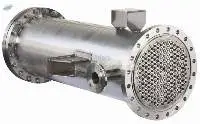
We produce shell and tube heat exchangers from carbon or stainless steel.

Heat exchangers are thermal machines where the heat from one media is transferred to another. In practice, they are used for cooling oil, for steam condensation in central heating systems and as boilers for hot tap water. The heat exchangers can be made from steel or stainless steel. The pipes inside the heat exchanger are according to the TIG welding procedure welded to the flange of the heat exchanger.

The heat exchangers are produced in various types: U-shaped, helical, with even pipes, conducting several parallel currents through the heat exchanger.
Apr-30-09

Heat Exchanger

MOQ: Not Specified
Supplier From Mumbai, Maharashtra, India
 Inquire Now  
Specifications:

Capacity:- 150 m2
Moc:- Sa 516 gr 70.
Jun-22-08
 Inquire Now  
We serve our clients in power generation business and all traditional areas of the process industries such as chemical and petrochemical plants as well as refineries. Our Production portfolio includes products and systems for:
Direct Dry Cooling (Air Fin Coolers)
Direct Condensing (Air Cooled Condensers)
Indirect Wet Cooling (Natural Draft Cooling Towers)
Cell Cooling Towers, Hybrid Cooling Towers
Industry Dry Cooling (Mainly Heller System)
Special Applications (Surface Condensers, desublimator, Post Reactors, Shell &Tube Heat Exchangers, Bop Engineering)
Plate heat exchanger
Exchanger Scraped Surface
Exchanger shell and tubular
Exchanger spiral heat
Pipe heat exchanger
Tube and shell exchanger
Cooling condensation equipments


Based on our technology, we are able to develop individual solution as well as standardized system for our customers. Our products are designed for optimal performance, cost-effective operation and minimal maintenance.

Our mission is to be the preferred supplier, recognized for our innovative productions as well as for the high degree of added value generated & quality for our clients.
Oct-25-23

Heat Exchanger( Shell & Tube Type)

$2.00K
MOQ: 1  Pieces
Supplier From Noida, Uttar Pradesh, India
 Inquire Now  
Morish India designs and manufactures â??Shell & Tube Heat Exchangersâ?? which are the most widely and commonly used Heat Transfer Equipment in many industries.

TYPE-Fixed Tube Sheet, Removable tube Bundle
CAPAICITY- As per user requirements
SHELL DIA- 4 Inch To 50 Inch
SHELL LENGTH- Max 120 Inch
TUBES-Plain, Corrugated, Integrally Finned
Apr-24-23

Heat Exchanger

MOQ: Not Specified
Supplier From Jamshedpur, Jharkhand, India
 Inquire Now  
A Heat exchanger is a system used to transfer heat between two or more fluids. Heat exchangers are used in both cooling and heating processes. Fi-Way is dedicated to deliver the requirement of customers as per their needs of different types of heat exchangers
Jan-19-23

Hot Air Stenter Dryer Heat Exchanger

MOQ: 1  Pieces
Sample Available
Supplier From Ankleshwar, Gujarat, India
 Inquire Now  
Essential part of Stenter Machine widely used in Hot air Stenter machine. Generally Fabricated with MILD STEEL, ALUMINUM, STAINLESS STEEL Material Duly hydraulically tested ready to fit, easy to replace with existing heat exchanger.
Jan-03-23

Fitzer - Shell And Tube Heat Exchanger

MOQ: 1  Pieces
Sample Available
Supplier From Ankleshwar, Gujarat, India
 Inquire Now  
We manufacture Shell & Tube type Heat Exchangers in a wide variety of sizes & materials. We have a complete facility to design (Thermal and Mechanical) and manufactures complete range of Shell and Tube Heat Exchangers for cooling, condensing and heating application.
A Shell & Tube Heat Exchanger Consists of a Shell with Traditional plain tubes or enhanced surface tubes for high thermal performance.
Jan-03-23

Fitzer - Plate Heat Exchangers

MOQ: 1  Pieces
Sample Available
Supplier From Ankleshwar, Gujarat, India
 Inquire Now  
Plate Heat Exchanger uses metal plates to transmit heat between two fluids and is available in different specifications. Also, using this modern solution has more advantages over conventional heat exchangers. At Process Engineers And Associates, you will get the unparalleled quality at industry leading prices. Being one of the industryâ??s leading Plate Heat Exchanger Manufacturers In Delhi/NCR, we offer several specifications to choose from.

Major Characteristics Of Plate Heat Exchanger Are:
Simple And Compact Design: This Industrial Plate Heat Exchanger has a simple fabrication and comes in small and easy-to-use designs to fit in your industry premises. These thin sheets have corrugations and patterns to increase the surface area as well as the efficiency of the products.
Quick To Clean And Maintain: These Heat Exchangers are made of good quality metal, which makes it easier to clean and maintain them after completing the application.
Easy To Enhance The Capacity: You can simply expand the size and capacity of the sheet by just adding one along with others.
Application Areas:
Steel Industry
Marine Industry
Pharma Industry
Dairy Industry
Beverage Industry
Jan-03-23

Fitzer - Spiral Heat Exchanger

MOQ: 1  Pieces
Sample Available
Supplier From Ankleshwar, Gujarat, India
 Inquire Now  
Design Features & Benefits
The spiral plate heat exchanger is made by rolling two long metal plates around a center core to form two concentric spiral flow passages, one for each fluid. The plate edges are welded shut so that each fluid stays within its own passage and there is no flow bypassing or intermixing. Channel plate width and spacing (gap between plates) are optimized for the specified duty, maximum heat transfer, and ease of access. The plate gap is maintained by welded spacer studs although some designs do not require them.

Due to its inherent circular design and large surface area to volume ratio, the spiral heat exchanger offers unique advantages over other types of heat exchangers like the shell and tube.


High Thermal Efficiency
Single and long curving flow passages with a uniform rectangular cross-section ensure superior flow distribution, intense turbulence, and high heat transfer coefficients (50-100% greater than shell & tubes).

Self-Cleaning Passages
The spiral's single-flow passages induce high shear rates that scrub away deposits as they form. This self-cleaning effect reduces fouling and makes spiral heat exchangers ideal for handling tough fluids such as process slurries, sludge, and media with suspended solids or fibers.

Countercurrent or Co-current
Spiral heat exchangers normally operate in true countercurrent flow for close approaches and temperature crosses. Occasionally a co-current flow design has major benefits, especially in cooling or heating fluids prone to gelation, burn-on, freezing or similar skin temperature related fouling.

Small Footprint & Easy Access
The spiral heat exchanger is compact and requires minimal space for installation and servicing. Removable covers provide easy access to interior heat transfer surfaces for field inspections, routine maintenance, or manual cleaning if required.
Sep-03-21

Heat Exchangers

$8
MOQ: 1  Pair
Supplier From Coimbatore, Tamil Nadu, India
 Inquire Now  
Heat Exchangers:

We Manufacture Shell and Tube Fixed Heat Exchangers, Also U Tube Heat Exchangers With Tube Plate, Shell, Baffles, Tie Rods, Header Etc, for Heat Transfer Applications Used in Chemical Industries, Thermal Plants With Steel and Stainless Shells and Tubes if Steel, Copper and Aluminum Tubes to Tema Standards.
Jun-14-17

Heat Exchanger

MOQ: Not Specified
Supplier From Suzhou, Jiangsu, China
 Inquire Now  
Heat Exchanger:

Shell & Tube Heat Exchangers

We design and manufacture a wide variety of shell and tube exchangers with styles defined by TEMA or variations thereof. We have extensive experience with carbon steel, high alloys and weld overlay materials to suit a wide variety of process requirements.

Size : Outside Diameter: 6 inches up to 192 inches

Length : 4 feet up to 100 feet
Weight : 2,000 lbs up to 500,000 lb

Materials

- Carbon steel
- Low Alloy (1.25 Cr, 2 Cr, 5 Cr, 9 Cr, 13 Cr)
- Austenitic 300 series stainless (304, 316, 317, 321, etc)
- Duplex stainless steels
- High alloy (600, 800, 825 series)
- C276
- Monel
- Brass, 70-30 Cu-Ni, 90-10 Cu-Ni
- Titanium (limited)
- Weld overlay (300 series, high-alloy)

Pressure

Atmospheric up to 6,000 psig (welding up to 5 inches thick)

Design

- HTRI Category III member
- Aspentech TEAMS, Compress
- FE/Pipe and Nozzle/Pro
- Customized software
- AutoCad, Inventor
- FEA ANSYS (sub-contracted)
Nov-17-16
 Inquire Now  
Heat Exchangers (Coil Type)

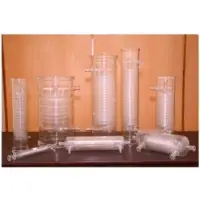
The overall heat transfer coefficiency of Borosilicate glass equipment compare favourably with many alternative materials because of its smooth surface which improve the film coefficient and reduce the tendency of fouling.

Heat exchangers are avilable in two basic types: coil type and shell & tube type. Shell & tube type heat exchangers are of recent development.
Nov-17-16
 Inquire Now  
Heat Exchangers - Shell And Tube Type

The overall heat transfer coefficiency of Borosilicate glass equipment compare favourably with many alternative materials because of its smooth surface which improve the film coefficient and reduce the tendency of fouling.

Heat exchangers are avilable in two basic types: coil type and shell & tube type. Shell & tube type heat exchangers are of recent development.
Apr-29-16
 Inquire Now  
Chemical equipment:

Our company mainly design, manufacture all kinds of storage tank, gas, reaction kettle, heat exchanger, stirred tank and other pressure vessels.Design and manufacture according to GB testing standards, ASME and PED.Non-standard equipment

Ordering instruction:

1. Processing with supplied drawings and samples by customers
2. Independent design to confirm
You need to provide parameters are as follows:
device traffic, filtering medium,fluid operating pressure, filter precision, operating temperature,the interface size, the interface position and size.
3. Can provide a standard form of filters for customers to choose.
GOLD Member
VERIFIED
Nov-05-21
Supplier From Pune, Maharashtra, India
 Inquire Now
Nov-01-22
 Inquire Now  
Removable Plate Heat Exchanger:

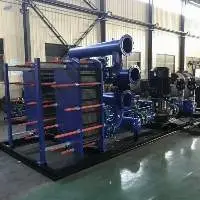
The Removable plate heat exchanger is a new type of high-efficiency heat exchanger composed of a series of metal sheets with a certain corrugated shape. Thin rectangular channels are formed between the various plates, and heat is exchanged through the halves. Plate heat exchanger is an ideal equipment for liquid-liquid and liquid-vapor heat exchange. Under the same pressure loss, the heat transfer coefficient is 3-5 times higher than that of the tubular heat exchanger, the floor area is one third of that of the tubular heat exchanger, and the heat recovery rate can be as high as 90% or more.

This product is suitable for chemical, machinery, food, beverage, medicine, residential heating, hot water supply, air conditioning and other departments. Intermediate heat exchangers used in conjunction with boilers, intermediate heat exchangers in high-rise buildings, etc., soda ash industry, synthetic ammonia, alcohol fermentation, resin synthesis cooling, etc.

Detachable plate heat exchanger is a new type of energy-saving heat exchange device with high heat transfer effect, compact structure, small footprint, easy operation, convenient cleaning, disassembly and maintenance, and easy to change the heat exchange area or process combination, etc. advantage.

1. The Removable plate heat exchanger has a compact structure with a small footprint, and the heat exchange area per unit volume is 2 to 5 times that of the shell-and-tube type. Unlike the shell-and-tube type, the maintenance site for drawing out the tube bundle is not reserved, so the same For heat exchange, the plate heat exchanger covers an area of â??â??about 1/5~1/8 of the shell and tube heat exchanger.

2. It is easy to change the heat exchange area or process combination. As long as a few plates are added or reduced, the purpose of increasing or reducing the heat exchange area can be achieved; by changing the plate arrangement or replacing a few plates, the required process combination can be achieved. It is almost impossible to increase the heat transfer area of â??â??shell and tube heat exchangers to adapt to new heat exchange conditions.

Removable plate heat exchanger is a kind of heat exchanger that is widely used in heat exchangers. It is widely used in chemical, machinery, food, beverage, medicine and other occasions. Users should select and use according to actual needs and the advantages and characteristics of heat exchangers are used to choose, and well-known brand products are also very important.
Nov-01-22
 Inquire Now  
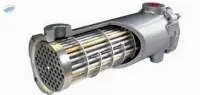
The Extruded Fin Tube also known as� Bimetallic Fin Tube� is one of the most preferred finning processes for various applications.

Manufacturing process:
Fin is produced by the rolling method (three-roll oblique rolling). Its working principle is: The smooth tube is lined with a mandrel, the tube material is driven by the roller blade to make a spiral linear movement, and is rolled by the roller. The hole pattern composed of the groove and the core rod is gradually processed with fins on its outer surface. In order to facilitate the formation of fins, the rolling parts adopt three stages of biting, rolling, and shaping during the deformation process, so that the processed fins are complete, smooth, and regular. The finned tube produced by this method is based on the base tube and the outer fin is an organic whole, so there is no problem of contact thermal resistance loss and electrical corrosion. It has good heat transfer efficiency and strong resistance to deformation. Extruded finned tubes consist of a light pipe and fins â??attachedâ?? to it. The structural parameters are mainly the inner diameter and outer diameter of the finned tube, the wall thickness of the finned tube, the fin pitch, the fin thickness and the fin height.
Material Options:
We offer the widest range of material in the industry and can extend it on request in case of special requirements for heat conductivity, mechanical properties or corrosion resistance. Below are our regular materials` combination.
A. Copper aluminum composite finned tube
B. Steel aluminum composite finned tube
C. Pure aluminum finned tube
D. Pure copper finned tube

Fin Height Options:
A. Low finned tubes
The fins of the low finned tube are extruded directly from the tube material. The fin height is only 1-2 mm. The common low fins are 1.6 mm in the shell- and-tube heat exchanger. This kind of finned tube does not need to consider the contact thermal resistance with the tube.

B. Middle finned tubes
The fin height of the finned tube is about 3.2 mm, which is often used in pressure vessel equipment such as shell and tube heat exchangers.

C. High finned tubes
The finned tubes are usually used in air heat exchangers, whose height is lower than 16mm, depending on working conditions.

D. Customized specification, please reach to us for more details.

Extruded Finned Tubes Characteristic:
A. High heat transfer performance and low contact thermal resistance
B. The contact area between fins and tubes is large, and the connection is tight and firm.
C. Good corrosion resistance, stable performance for long-term use.
D. Fins have good rigidity and are not easy deform.
E. Light weight and Low cost.
F. Low air resistance
G. Easy to clean
Nov-01-22
 Inquire Now  
Shell and tube heat exchanger is a device that transfers part of the heat of hot fluid to cold fluid,
also known as heat exchanger. Shell and tube heat exchangers are general-purpose equipment in chemical, petroleum, power, food and many other industrial sectors, and play an important role in production. There are many types of heat exchangers, but according to the principle and method of heat exchange between cold and hot fluids, they can be basically divided into three categories: partition type, hybrid type and regenerative type. Among the three types of heat exchangers, the partition wall heat exchanger is the most widely used.

According to the different heat exchange tube bundles, the partition heat exchanger is divided into: FPR floating coil heat exchanger, LWR threaded tube heat exchanger, and WMH eddy current heat film heat exchanger.

Advantages of shell and tube heat exchangers:

1. High heat transfer coefficient: threaded pipe is a high-efficiency heat transfer element combining internal and external threads made of red copper or stainless steel with high thermal conductivity. The threaded pipe heat exchanger made of it has little fluid resistance. , then a strong turbulent flow is formed, which greatly improves the heat release coefficient inside and outside the tube. After testing, the total heat transfer coefficient of steam-water heat exchange is 3000~6000W/m2, and the total heat transfer coefficient of water-water heat exchange is 2500~5500W/m2.

2. Compact structure: This product has a large heat transfer area per unit volume. The total heat transfer coefficient is high, so the floor space is greatly reduced, saving materials and space.

3. Not easy to scale: Due to the special concave-convex structure of the threaded pipe, multi-flow layers and rotary scouring are generated inside and outside the pipe. In addition to the thermal expansion and contraction of the pipe, impurities will not remain inside and outside the pipe wall, so it is not easy to scale. , the long-term operation effect is good.

4. Not easy to leak: The sealing circumference of this product is short, the thick thread of the threaded pipe is similar to an expansion joint, and it has its own compensation ability. The thermal stress of the heat exchanger is small, and it is not easy to leak.

5. Easy installation: This series of heat exchangers has two types: horizontal and vertical, which are easy to install in different positions.

6. Compulsory supervisory inspection, reliable quality: manufactured, inspected and accepted in strict accordance with GB150-1998 "Steel Pressure Vessel", GB151-1999 "Shell and Tube Heat Exchanger" and related standards, and accepted "Pressure Vessel Safety Technology Supervision Regulations" supervision.
1442 Heat Exchangers Suppliers
Short on time? Let Heat Exchangers sellers contact you.
See what buyers and suppliers are discussing in Heat Exchangers import export community