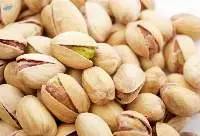
The pistachio Pistacia vera, a member of the cashew family, is a small tree originating from Central Asia and the Middle East. The tree produces seeds that are widely consumed as food.
Pistacia vera is often confused with other species in the genus Pistacia that are also known as pistachio. These other species can be distinguished by their geographic distributions (in the wild) and their seeds which are much smaller and have a soft shell.
In 2019, Iran and the United States combined produced 74% of the world's pistachios.
The pistachio Jumbo SA (Sabor Azafran) is the one of the best pistachio with 20-22 caliber.
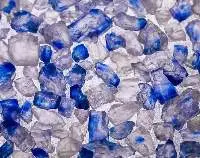
Blue Salt, or Persian Blue Salt is a unique and rare mineral found in the mountain ranges of Iran. This is one of the only places in the world that has Blue Salt. Persian Blue Salt is formed from an ancient sea that dried out 110 million ago, was buried over time, and then compacted by the Earth. When tectonic plate movement created the mountain ranges of Iran, the Blue Salt veins in the rock became exposed. Our Persian Blue Salt is mined from these mountains. Due to the fact that this salt is mined from a buried ancient sea, it is very clean and pure, it has not been exposed to any modern environmental pollutants or contaminants. Blue Salt is a natural product, the blue colour is a natural side effect from this salt structure being compact. This salt was under great pressure from the Earth and compacted to form tight crystal structure, this compact structure refracts the blue light, this is what makes blue salt blue.
Our Persian Blue Salt collection comes in a variety of grain sizes. They are fine, corse, small rock salt, and large crystal.
Persian blue salt is rich in potassium. Potassium helps reduce blood pressure and cardiovascular health. Potassium is also helpful for muscle strength and bone strength and can protect against loss of muscle mass. It is involved in some body's key processes and 4700 milligrams of it should be consumed for adults.
307 Food Products Suppliers
Short on time? Let Food Products sellers contact you.
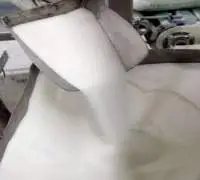
Our Premium ICUMSA 45 Sugar is a high-quality, refined cane sugar sourced from Brazil. It is a sparkling white, highly pure, and offers a sweet taste that is ideal for both household and industrial uses.
ICUMSA 45 is the highest quality sugar available on the market today. The International Commission for Uniform Methods of Sugar Analysis (ICUMSA) is an international standard that describes the color of the sugar. The lower the ICUMSA rating, the lighter the color and the purer the sugar. ICUMSA 45 sugar is a sparkling white and is highly sought after for its purity and quality.
Our sugar undergoes a rigorous refining process to ensure it meets the highest standards. It is free from any impurities and offers a uniform sweetness and texture, making it the perfect sweetener.
Packaging & Delivery:
Our Premium ICUMSA 45 Sugar is available in various packaging options to meet your requirements. We ensure safe and prompt delivery worldwide.
Quality Assurance:
We adhere to strict quality control measures to ensure that our customers receive only the best. Our ICUMSA 45 Sugar is inspected for quality and hygiene throughout the SGS production process.
The SGS testing methods indicate Brazil ICUMSA 45 as one of the finest quality products available on the market.
Specifications:
REFINED WHITE CANE SUGAR ICUMSA - 45 - RBU
- PRODUCT: ICUMSA 45 SUGAR SPECIFICATIONS.
- POLARITY at 20�°C 99.80�° Minimum.
- SULPHATED ASH CONTENT: 0.04 % Maximum by Weight.
- MOISTURE: 0.04% Maximum by Weight.
- MAGNETIC PARTICLES: mg /kg 4.
- SOLUBILITY: 100% Dry & free flowing.
- GRANULOMETRY: Fine Standard.
- ICUMSA: Color 45 ICUMSA attenuation index Units (Method #10-1978) Maximum AS: 1 P.P. M.
- COLOUR: Brilliant White.
- REDUCING SUGAR: 0.010% Maximum in Dry MASS.
- RADIATION: Normal w/o presence of cesium or iodine SO2: mg/kg 20 HEAVY METALS, TOXIC ELEMENTS Max mg/kg basis.
- ARSENIC 0.50 CADNIUM 0.05 COPPER 1.00. LEAD 1.00 MERCURY 0.01 ZINC 3.00.
- PESTICIDE TRACES Maximum mg / kg basis.
- DDT 0.005 PHOTOXIN 0.01 HEXACHLORAN GAMMA ISOMER 0.005 MICROBIOLOGICAL LIMITS.
- PHATOGENIC BACTERIA including SALMONELLA per 25 gram: Nil. Bacillus per gram: Nil.
- MAXIMUM PS: 0.5 P.P.M.
- MAXIMUM CU: 2 P.P.M.
- SUBSTANCE: SOLID CRYSTAL.
- POISONOUS: PHYTOSANTARY CERTIFICATE OF NO RADIATION, NO VIRUS, NO INSECT PARTS, HUSKS, NOPOISONOUS MATTER ANDNON- GENETIC AND IS SUITABLE FOR HUMAN CONSUPTION.
- Crop Sugar Should Be Extracted From Sound, Unfermented And Undecayed Sugar CANE.
- SUGAR SHOULD BE CLEAN FREE FROM ANY Foreign Matter, Taste Or Odour And Have The Sweet Taste Characteristic Of White Sugar Wheter Dry Or Insolution.
Product Details
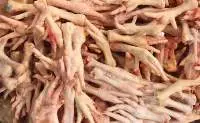
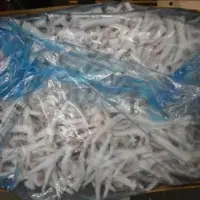
Frozen Chicken Paws Grade A
Origin: Russia / Brazil
Average weight: 35 g and above
Pricing (CIF)
Russia: USD 2,800 / MT
Brazil: USD 3,500 / MT
Frozen Whole Chicken (800-2400g)
Frozen Chicken Shawarma (Boneless whole Chicken)
Frozen Chicken Breast Fillet
Frozen Chicken Breast Boneless Skinless
Frozen Chicken Breast Boneless Skin On
Frozen Chicken Leg Quarter
Frozen Chicken Leg Boneless
Frozen Chicken Drumstick
Frozen Chicken 3 Joint Wings
Frozen Chicken Mid-Joint Wings
Frozen Chicken Wing Tip &Winglet / Wingstick
Frozen Chicken Feet 35g Up
Frozen Chicken Paw 30g Up
Frozen Chicken Back
Frozen Chicken Gizzard
Frozen Chicken Neck
Frozen Chicken Liver
General Product Appearance:
Clean
No yellow skin
No feathers
No bad smell
No blood
No black pad
No bruise
No chemical burns
Broken bones less than 2%
Moisture less than 2%
No black spot
Production and Approval
Packaging/Labeling: Please check Catalog in attachment for different packaging types. Custom/private packaging and labeling is also accepted. Please also inform in case private labeling in needed (Private labeling is free for orders above 100 MT)
Loading: Products are loaded in 40' Refrigerated containers. Each Container can be loaded with 27, 000 Kg (27 metric tons)
Transport Temperature: Product will be blasted and -22 degrees Celsius during transportation
Product Shelf Life: Our Products are guaranteed up to 24 months Shelf life, however, some destinations only allowed 12 months to be printed on labels. contact us to know what are the product regulations in your destination.
Product
White Refined Cane Sugar- Grade A (ICUMSA 45)
Origin: Brazil
Packaging: 50 kg bags (standard)
Delivery options:
CIF ASWP
FOB Santos Port, Brazil
FAS available (Paranagua Port, subject to buyer's warehouse)
Compliance
SGS inspection at origin
GACC-certified for China
Halal and Kosher certificates available upon request
Full compliance with applicable export regulations