PRODUCTS DESCRIPTION
Products based on milk protein and vegetable fat.
Fat and protein are customized to individual customer
requirements depending on the application.
APPLICATIONS
Milk mixes vegetable fat (palm or coconut) are perfect for:
In bakery, confectionery, ice cream, chocolate, biscuits,
cakes and pastries, soups, creams, sauces, food premixes,
beverages, coffee creamers and tea, desserts and many other food industry.
FEATURES AND BENEFITS
Extensive use throughout the food industry. Great cheaper
alternative to a standard milk powder.
Vegetable fat does not become rancid like milk fat thus significantly
is extended shelf life up to 24 months.
PACKING
Four-layer paper bag with polythene inner bag, 25 kg net.
SHELF LIFE
max.24 months from the date of production.
STORAGE CONDITIONS
Product must be stored in dry and cool place at temperatures below 20C and relative humidity not exceeding 75%.
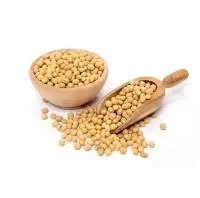
Botanical name Cicer arietinum
Taste Typical
Odor Odourless, no foreign odours
Color Typical, beige/yellow
Production area 4000 Tons
Caliber 6 mm to 9 mm
Packing White polypropylene packaging bag of 25 kg y 50 kg
Loading 20 feet: 24 metric tonnes
ANALYSIS VALUES
Foreign bodies 1.00% max
Insect damage 0.50% min
Moisture 14.00% max
Stained grains 1.00% max
Slightly stained 3.00% max
Broken 1.00% max
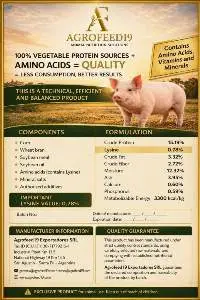
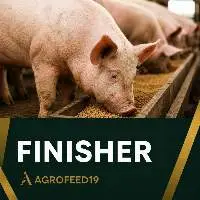
Complete Compound Feed for Finishing Pigs (Finisher)
This feed is formulated according to internationally recognized nutritional standards for pigs in the final growth and finishing stage, based on guidelines established by the National Research Council (NRC) and validated in intensive production systems.
The product is intended for pigs from approximately 70-75 kg live weight up to market or slaughter weight, a stage in which the economic efficiency of the production system and the final carcass quality are determined.
The designation "Finisher" indicates that the feed has been specifically designed to support the final phase of production, where the primary objective is to maximize the deposition of marketable body tissue (lean meat) while optimizing feed conversion efficiency and enhancing the commercial characteristics of the finished animal.
From a physiological and metabolic perspective, pigs at this stage have a greater feed intake capacity and an increasing tendency toward fat deposition. Therefore, the formulation requires a precise nutritional balance between energy and protein, with careful adjustment of the amino acid profile to support efficient protein synthesis while avoiding nutrient excesses that may increase production costs or negatively affect carcass quality. This balanced approach promotes optimal growth performance, feed efficiency, and profitability.
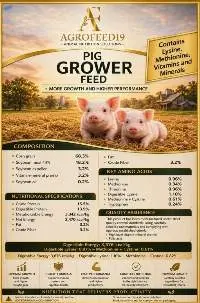
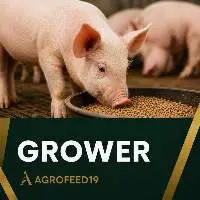
This feed is formulated according to internationally recognised nutritional standards for growing pigs, based on nutritional models established by the National Research Council (NRC) and validated in intensive production systems.
The product is intended for pigs within an approximate live weight range of 25-30 kg to 70-75 kg, a stage characterised by rapid growth, high protein deposition efficiency, and the continued development of the animal's structural framework.
The designation "Grower Development" indicates that the feed has been specifically designed to support a critical intermediate phase of the production cycle. During this period, the primary objectives are to maximise lean tissue growth, optimise feed conversion efficiency, and prepare the animal for the final finishing stage.
From a physiological and metabolic perspective, pigs at this stage exhibit greater digestive capacity and improved nutrient utilisation. This allows for the formulation of diets with a precise balance of energy and protein while adjusting essential amino acid levels to meet the animal's actual growth requirements, thereby supporting optimal performance, health, and productive efficiency.
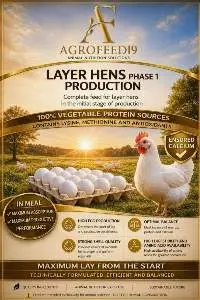
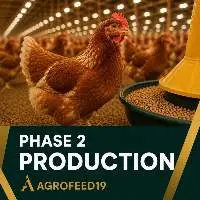
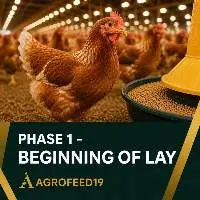
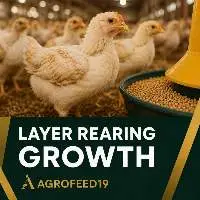
The Laying Hens Production - Phase 1 feed is formulated to meet the specific nutritional requirements of laying hens at the beginning of the productive stage, a period characterized by a sustained increase in egg production and high metabolic demand.
The formulation is based on a precise balance between metabolizable energy, crude protein, and essential amino acids, with special emphasis on lysine and methionine, which are fundamental for egg weight development and productive efficiency.
It also guarantees an adequate supply of calcium, available phosphorus, and micronutrients, essential for proper shell formation and bone mineralization.
Highly digestible raw materials are used, subjected to bromatological controls that verify parameters such as protein, energy, fiber, ether extract, ash, and moisture, ensuring uniformity, stability, and food safety.
Specific nutritional program aimed at the recovery of the bird, allowing physiological regeneration and
the restart of a new productive cycle with optimal results.
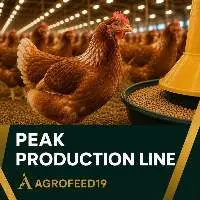
High nutritional density formulation designed to maximize laying percentage, egg size, and shell
quality during the period of highest productive demand.
Phase 1 Line - Beginning of Lay: Designed for the critical moment when the hen begins egg production. Priority is given to the development of the reproductive system, bone strengthening, and metabolic adaptation to the laying cycle.
Finisher Line: Formulation developed to maximize weight gain and productive efficiency during the final stage of the cycle, ensuring metabolic stability, carcass performance, and final animal quality.
Program focused on supporting muscle growth
and feed conversion efficiency, promoting uniform batch development and optimizing nutrient utilization during the intermediate growth stage.
Starter Line: Formulation designed for the post-weaning
stage, a critical period characterized by high digestive
sensitivity and elevated nutritional demand. Priority is given
to gastrointestinal tract adaptation, stimulation of voluntary
feed intake, and early animal development.