Please click here to check who's online and chat with them.

Find Verified Knitted Woven Garments Suppliers, Manufacturers and Wholesalers

Top Supplier Cities : -   Berlin   Germany  
Apr-27-20

Spunbond Meltblown Non Woven Fabric

$2 - $3.50
MOQ: 1000  Inches
Sample Available
Supplier From Berlin, Berlin, Germany
 Inquire Now  
About Meltblown Nonwove
Melt blown is a one step process to make fabrics from polymer.
The thermoplastics chips are fed through main dosing units & these chips are melted by means of the extruder. This extruder then extrudes the melt, which is then filtered & metered at a constant rate. This filament comes out from a single raw of spinneret orifice. It has a self bonding property but for coagulation & for better random laying hot air flow is provided.
The web generated is immediately passes among the Spunbond webs followed by pre-bonding rolls & finally through calendar for thermal bonding.
The main purpose of melt blown fabric is to provide barrier property for the liquid.
Sometimes the treatment like antistatic or hydrophilic are given to the fabrics & after drying the fabrics are wound in the winder as a roll form.
Unique characteristics such as water repellence or permeability or UV stability can be obtained by incorporating additives to the raw materials or applying different agents to the fabric.
Characteristics of Meltblown fabrics are:
The main desired characteristics expected for melt blown nonwoven fabrics are:
Adjustable Pores And Capillary Structure
Excellent barrier properties
Filament size 1 -3 �µm
High Elasticity
High Filtration capability
Isotropic formation- this means that the fibers are randomly distributed in the machine direction (MD) and cross-machine direction (CD).
Large Area-to-weight ratio
Self-bonding
The weight of the melt-blown fabrics in gram per square meter (GSM) should range from 4 g/m2 to over 1000 g/m2.
Very good thermal insulation for apparel application
Weak tensile properties
Wicking Properties

Application of spun-bond nonwoven fabrics:
Sanitary and Hygiene:
Sanitary napkins,
Baby diapers and
Incontinence diapers
Medical and Surgical:
Gowns,
Face masks,
Caps,
Drapes, etc
Other Miscellaneous Applications:
Filtration Material,
Agriculture,
Oilsorbents
Hot-melt adhesives
Headliners, etc
Apr-27-20

Eco-Friendly Meltblown Non Woven Fabric

$2 - $3.50
MOQ: 1000  Inches
Sample Available
Supplier From Berlin, Berlin, Germany
 Inquire Now  
About Meltblown Nonwoven
â?¢ Melt blown is a one step process to make fabrics from polymer.
â?¢ The thermoplastics chips are fed through main dosing units & these chips are melted by means of the extruder. This extruder then extrudes the melt, which is then filtered & metered at a constant rate. This filament comes out from a single raw of spinneret orifice. It has a self bonding property but for coagulation & for better random laying hot air flow is provided.
â?¢ The web generated is immediately passes among the Spunbond webs followed by pre-bonding rolls & finally through calendar for thermal bonding.
â?¢ The main purpose of melt blown fabric is to provide barrier property for the liquid.
â?¢ Sometimes the treatment like antistatic or hydrophilic are given to the fabrics & after drying the fabrics are wound in the winder as a roll form.
â?¢ Unique characteristics such as water repellence or permeability or UV stability can be obtained by incorporating additives to the raw materials or applying different agents to the fabric.
Characteristics of Meltblown fabrics are:
The main desired characteristics expected for melt blown nonwoven fabrics are:
â?¢ Adjustable Pores And Capillary Structure
â?¢ Excellent barrier properties
â?¢ Filament size 1 -3 �µm
â?¢ High Elasticity
â?¢ High Filtration capability
â?¢ Isotropic formation- this means that the fibers are randomly distributed in the machine direction (MD) and cross-machine direction (CD).
â?¢ Large Area-to-weight ratio
â?¢ Self-bonding
â?¢ The weight of the melt-blown fabrics in gram per square meter (GSM) should range from 4 g/m2 to over 1000 g/m2.
â?¢ Very good thermal insulation for apparel application
â?¢ Weak tensile properties
â?¢ Wicking Properties

Application of spun-bond nonwoven fabrics:
â?¢ Sanitary and Hygiene:
â?¢ Sanitary napkins,
â?¢ Baby diapers and
â?¢ Incontinence diapers
â?¢ Medical and Surgical:
â?¢ Gowns,
â?¢ Face masks,
â?¢ Caps,
â?¢ Drapes, etc
â?¢ Other Miscellaneous Applications:
â?¢ Filtration Material,
â?¢ Agriculture,
â?¢ Oilsorbents
â?¢ Hot-melt adhesives
â?¢ Headliners, etc
Apr-28-20

Meltblown Nonwoven Raw Material

$2 - $3.50
MOQ: 1000  Inches
Sample Available
Supplier From Berlin, Berlin, Germany
 Inquire Now  
About Meltblown Nonwoven

Melt blown is a one step process to make fabrics from polymer.
The thermoplastics chips are fed through main dosing units & these chips are melted by means of the extruder. This extruder then extrudes the melt, which is then filtered & metered at a constant rate. This filament comes out from a single raw of spinneret orifice. It has a self bonding property but for coagulation & for better random laying hot air flow is provided.
The web generated is immediately passes among the Spunbond webs followed by pre-bonding rolls & finally through calendar for thermal bonding.
The main purpose of melt blown fabric is to provide barrier property for the liquid.
Sometimes the treatment like antistatic or hydrophilic are given to the fabrics & after drying the fabrics are wound in the winder as a roll form.
Unique characteristics such as water repellence or permeability or UV stability can be obtained by incorporating additives to the raw materials or applying different agents to the fabric.
Characteristics of Meltblown fabrics are:

The main desired characteristics expected for melt blown nonwoven fabrics are:

Adjustable Pores And Capillary Structure
Excellent barrier properties
Filament size 1 -3 �?�µm
High Elasticity
High Filtration capability
Isotropic formation- this means that the fibers are randomly distributed in the machine direction (MD) and cross-machine direction (CD).
Large Area-to-weight ratio
Self-bonding
The weight of the melt-blown fabrics in gram per square meter (GSM) should range from 4 g/m2 to over 1000 g/m2.
Very good thermal insulation for apparel application
Weak tensile properties
Wicking Properties


Application of spun-bond nonwoven fabrics:

Sanitary and Hygiene:
Sanitary napkins,
Baby diapers and
Incontinence diapers
Medical and Surgical:
Gowns,
Face masks,
Caps,
Drapes, etc
Other Miscellaneous Applications:
Filtration Material,
Agriculture,
Oilsorbents
Hot-melt adhesives
Headliners, etc
Apr-27-20

Meltblown Nonwoven Raw Material

$2 - $3.50
MOQ: 1000  Inches
Sample Available
Supplier From Berlin, Berlin, Germany
 Inquire Now  
About Meltblown Nonwoven

Melt blown is a one step process to make fabrics from polymer.
The thermoplastics chips are fed through main dosing units & these chips are melted by means of the extruder. This extruder then extrudes the melt, which is then filtered & metered at a constant rate. This filament comes out from a single raw of spinneret orifice. It has a self bonding property but for coagulation & for better random laying hot air flow is provided.
The web generated is immediately passes among the Spunbond webs followed by pre-bonding rolls & finally through calendar for thermal bonding.
The main purpose of melt blown fabric is to provide barrier property for the liquid.
Sometimes the treatment like antistatic or hydrophilic are given to the fabrics & after drying the fabrics are wound in the winder as a roll form.
Unique characteristics such as water repellence or permeability or UV stability can be obtained by incorporating additives to the raw materials or applying different agents to the fabric.
Characteristics of Meltblown fabrics are:

The main desired characteristics expected for melt blown nonwoven fabrics are:

Adjustable Pores And Capillary Structure
Excellent barrier properties
Filament size 1 -3 �?�µm
High Elasticity
High Filtration capability
Isotropic formation- this means that the fibers are randomly distributed in the machine direction (MD) and cross-machine direction (CD).
Large Area-to-weight ratio
Self-bonding
The weight of the melt-blown fabrics in gram per square meter (GSM) should range from 4 g/m2 to over 1000 g/m2.
Very good thermal insulation for apparel application
Weak tensile properties
Wicking Properties


Application of spun-bond nonwoven fabrics:

Sanitary and Hygiene:
Sanitary napkins,
Baby diapers and
Incontinence diapers
Medical and Surgical:
Gowns,
Face masks,
Caps,
Drapes, etc
Other Miscellaneous Applications:
Filtration Material,
Agriculture,
Oilsorbents
Hot-melt adhesives
Headliners, etc
Aug-13-26

Clothing Clearance Items For Children, Women, NEW

$1 - $5 / Piece (EXW)
MOQ: Not Specified
Supplier From Munchen, Bayern, Germany
 Inquire Now  
Clearance items for women, children, and men, made in Italy

from our Italian warehouse.

We have direct contracts with renowned Italian manufacturers for children's and women's clothing.

These are clearance items, but always from the current collection.

Further information available upon request.
252 Knitted Woven Garments Suppliers
Short on time? Let Knitted Woven Garments sellers contact you.
Apr-28-20

Fresh Vegetables

$40 - $300
MOQ: 2000  Inches
Sample Available
Supplier From Berlin, Berlin, Germany
Supplier Of Fresh Vegetables   |   Caps   |   Potato   |   Onion   |   Cabbage   |   Capsicum   |   Brinjal   |   Okra   |   Pumpkin   |   Beetroot   |   Sweet Corn   |   Drumstick   |   Baby Corn
 Inquire Now  
Amla (Nellika)
Beetroot
Beans
Bhindi (Okra)
Brinjal (Multi colour)
Brinjal (Long green)
Brinjal (Long black big)
Brinjal (Multi colour keri)
Baby Corn
Banana Flower
Banana Stem
Bhaji Mirchi
Cabbage
Capsicum
Chilly
Curry Banana
Chow Chow
Doodhi
Drumstick
Gawar
Green Papaya
Kappa
Karela
Kakari Long
Kumbalam (Small)
Kumbalam (Big)
Mathan (Kerala style big)
Nukal
Pappadi
Paduval (Long)
Paduval (Small)
Potato (Baby)
Red Pumpkin
Raddish
Small Onion
Sweet Potato
Sweet Corn
Suran
Thuriya
Tindly
Apr-28-20

Pure And Fresh Vegetables

$40 - $300
MOQ: 2000  Inches
Sample Available
Supplier From Berlin, Berlin, Germany
Supplier Of Fresh Vegetables   |   Caps   |   Potato   |   Onion   |   Cabbage   |   Capsicum   |   Brinjal   |   Okra   |   Pumpkin   |   Beetroot   |   Sweet Corn   |   Drumstick   |   Baby Corn
 Inquire Now  
Amla (Nellika)
Beetroot
Beans
Bhindi (Okra)
Brinjal (Multi colour)
Brinjal (Long green)
Brinjal (Long black big)
Brinjal (Multi colour keri)
Baby Corn
Banana Flower
Banana Stem
Bhaji Mirchi
Cabbage
Capsicum
Chilly
Curry Banana
Chow Chow
Doodhi
Drumstick
Gawar
Green Papaya
Kappa
Karela
Kakari Long
Kumbalam (Small)
Kumbalam (Big)
Mathan (Kerala style big)
Nukal
Pappadi
Paduval (Long)
Paduval (Small)
Potato (Baby)
Red Pumpkin
Raddish
Small Onion
Sweet Potato
Sweet Corn
Suran
Thuriya
Tindly
Dec-10-19
 Inquire Now  
we would like to offer sub unsold- :
ABCs for aluminium recycling
ALU shreddered from alu bottle caps
strange plastics 4 7 %
lacquer 1 2 %
22 24 mts per 40 container
50 100 mts per month
If interested pls. ask for Price.
Dec-04-19

Pe-Po Bottle Caps

$780
MOQ: Not Specified
Supplier From Delmenhorst, Germany
 Inquire Now  
We offer - Sub unsold-
PE-PO bottle caps shreddered
with abt. 3 % lables, flakes + film
Quantity: abt. 5 - 6 Containers per month
Price: US $ 780,--/mt FOB
Sep-25-19

Brand Name Apparel Stock

$1 - $5
MOQ: Not Specified
Supplier From Rosrath, North-rhine Westphalia, Germany
 Inquire Now  
We offer overstock, outlet clothing, shoes and accessories of the most up-to-date fashion brands. Small and large quantities. Inquire with your contact and company details to receive more info.
Our offer varies and depend on availability of the brand and season.
Dec-03-18
Supplier From Zweibrucken, Germany
 Inquire Now
Mar-26-20
Supplier From Germany
 Inquire Now
Mar-15-16
Supplier From Munich, Baveria, Germany
 Inquire Now
Nov-11-09
Supplier From Luenen, NRW, Germany
 Inquire Now
Jan-14-13
Supplier From Hamburg, Germany
 Inquire Now
Nov-25-13
Supplier From Düsseldorfer, Germany
 Inquire Now
Jan-16-14
Supplier From Stuttgart, Germany
 Inquire Now
Aug-12-13
Supplier From Frankfurt Am Main, Hessen, Germany
 Inquire Now
Feb-19-14
Supplier From Bremen, Germany
 Inquire Now
Dec-24-14
Supplier From Munster, Deutschland, Germany
 Inquire Now
Sep-15-21
Supplier From Germany
 Inquire Now
Mar-06-12
Supplier From Berlin, Germany
 Inquire Now
Aug-23-23
Supplier From Hamburg, Germany, Germany
 Inquire Now
Jun-30-23
Supplier From Germany
 Inquire Now
Jun-03-23
Supplier From Germany
 Inquire Now
Feb-07-20
Supplier From Germany, Germany
 Inquire Now
Dec-14-19
Supplier From Germany, Germany
 Inquire Now
Apr-23-15
Supplier From Stuttgart, Germany, Germany
 Inquire Now
May-27-15
Supplier From Frankfurt, Germany
 Inquire Now
Feb-28-15
Supplier From Westhausen, Baden, Germany
 Inquire Now
Jun-23-20
Supplier From Germany
 Inquire Now
Feb-10-19
Supplier From Germany, Germany
 Inquire Now
Feb-25-16
Supplier From Moenchengladbach, Nrw, Germany
 Inquire Now  
BRAND NAME STOCKLOT CLOTHING AT TOP PRICES !

- 70 Brands from countries like Germany, Spain, Italy, Netherlands, Denmark, Sweden, UK …
- Wholesale at top prices
- Fresh deliveries every week
- More than 3,000,000 pieces regularly on stock


Packed in Bales or Box, each approx. 150 kg
Jan-15-19
Supplier From Filderstadt, Germany
 Inquire Now
Jan-05-19
Supplier From Kitzingen, Germany
 Inquire Now
Jun-13-22
Supplier From Dielheim, Germany
 Inquire Now
Jun-05-14
Supplier From Frankfurt, Germany
 Inquire Now
Feb-13-25
Supplier From Dielheim, Badenwutemberg, Germany
 Inquire Now
May-11-17

Nespresso Compatibles Capsules

$1
MOQ: Not Specified
Supplier From Berlin, Germany
 Inquire Now  
Hello. We provide nespresso compatibles capsules. Made in Italy. 11 different types +decafenato. We are looking also for dealers worldwide for our brand. If you interested please contact me: protect1@web.de Whatsap or Viber: 00491723158307 Kind regards. G.Pronin. z
Feb-05-20
Supplier From Berlin, Germany
 Inquire Now
Mar-19-14
Supplier From Bonn, North-Rhein Westfalen, Germany
 Inquire Now
Jun-24-26
Supplier From Dreieich, Hessen, Germany
 Inquire Now
Mar-13-22
Supplier From Germany
 Inquire Now
Mar-24-20
Supplier From Numberg, Numberg, Germany
 Inquire Now
Dec-14-06
Supplier From Bad Homburg V.D.H., Hessen, Germany
 Inquire Now
Dec-26-19
Supplier From Germany
 Inquire Now
Sep-23-19
Supplier From Rosrath, North-rhine Westphalia, Germany
 Inquire Now
Feb-10-14
Supplier From Coimbatore, Tamil Nadu, Germany
 Inquire Now
Jan-17-14
Supplier From Kehl, Germany
 Inquire Now
252 Knitted Woven Garments Suppliers
Short on time? Let Knitted Woven Garments sellers contact you.
See what buyers and suppliers are discussing in Knitted Woven Garments import export community

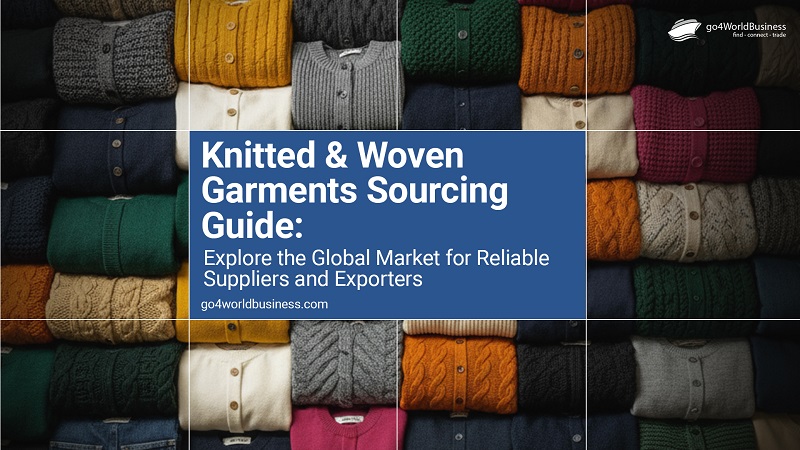
Knitted & Woven Garments Sourcing Guide: Explore the Global Market For Reliable Suppliers And Exporters


We all agree with the fact that knitted and woven garments are the backbone of the global apparel industry. From soft cotton tees and cozy sweaters to crisp shirts and elegant trousers, these fabrics shape the way the world dresses. The versatility of these garments makes them essential for all seasons and fashion segments. Knitted fabrics are ideal for comfortable, stretchable clothing like t-shirts, leggings, and activewear. And when we talk about woven fabrics, these are perfect for structured pieces such as formal shirts, trousers, and jackets. The major difference between the two is that we make knitted fabrics by interlooping yarns, while woven fabrics are made by interlacing warp and weft yarns. As a result, knitted garments are more breathable because of the larger gaps between threads, naturally wrinkle-resistant, and quicker to produce. Woven garments, on the other hand, wrinkle more easily and have a slower production process, but are usually more durable. 

Businesses looking to expand in apparel sourcing often rely on trusted knitted and woven garments suppliers to ensure consistent quality and supply. If you want to know where to find knitted and woven garments in bulk, you’ve come to the right place. Here, you’ll discover key market insights and learn some of the best ways to find and connect with reliable knitted and woven garments suppliers and exporters worldwide.


What Are the Most Popular Knitted & Woven Garment Varieties in Global Demand?

Both knitted and woven garments have a strong and growing global market. People love knitted fabrics for their flexibility, softness, and warmth, making them popular in everyday and winter wear. And woven fabrics are known for their strength, durability, and crisp look, making them a perfect choice for formal and semi-formal attire. Moreover, the growing shift toward sustainable materials (like organic cotton, recycled polyester, and bamboo) is also creating new sourcing and business opportunities. It is important to note that many wholesale knitted and woven garments manufacturers now offer eco-friendly fabric options to meet the expectations of modern buyers. Here are the most popular varieties that consumers demand. 

Fabric TypeCommon GarmentsKey FeaturesBuyer Insights (What to Look For)
Single Jersey KnitT-shirts, casual dresses, leggingsSoft, stretchable, lightweightIdeal for everyday wear; check GSM (weight) and cotton/spandex ratio for quality.
Rib KnitCuffs, collars, sweaters, babywearExcellent elasticity, textured ribsUsed in stretch areas; ensure dimensional stability after washing.
Interlock KnitPolo shirts, sportswear, babywearThicker, smooth on both sidesDurable and holds shape; good for premium casualwear.
Fleece KnitHoodies, sweatshirts, joggersWarm, soft inside, insulatingBest for winterwear; verify fabric brushing quality and shrinkage control.
Piqué KnitPolo shirts, uniformsTextured, breathable, wrinkle-resistantCommon in corporate wear; ensure colorfastness and uniform texture.
Jacquard KnitFashion tops, sweaters, dressesIntricate patterns, decorativePremium product; check for pattern consistency and yarn quality.
Denim (Woven)Jeans, jackets, skirtsDurable, structured, heavyweightInspect stitching density and wash effects; verify cotton content.
Twill (Woven)Chinos, uniforms, jacketsDiagonal weave, sturdyLess wrinkle-prone; check yarn count and fabric finishing.
Poplin (Woven)Shirts, blouses, dressesSmooth, lightweight, crispGreat for formalwear; ensure even weave and color uniformity.
Canvas (Woven)Workwear, bags, jacketsHeavy-duty, rugged textureIdeal for outerwear; confirm weave tightness and durability.
Linen (Woven)Summer shirts, trousers, dressesBreathable, cool, natural lusterHigh-end look; check for fabric slubs and shrinkage control.
Satin (Woven)Dresses, blouses, eveningwearGlossy front, smooth drapeLuxury appeal; ensure color consistency and soft hand-feel.
Chiffon/Georgette (Woven)Scarves, dresses, blousesSheer, lightweight, flowyFor delicate garments; check transparency and tear strength.
Corduroy (Woven)Pants, jackets, skirtsRibbed surface, warm, thickSeasonal fabric; verify wale count (ridges per inch).
Flannel (Woven)Shirts, sleepwear, winterwearSoft, brushed, warmGreat for cold weather; inspect brushing and shrinkage tolerance.


As you already know, consumer demand for knitted & woven fabrics usually rises during the winter season. Along with sourcing knitted & woven garments, you can also explore related winter wear products to expand your business portfolio and meet diverse customer needs. You should know that many knitted & woven garments suppliers also offer complementary products such as knitted fabrics, knitted gloves, hoodies, knitted jersey fabric, and garment fabrics for production, as well as woven fabrics, woven sacks, and woven carpets for packaging or textile applications. To make your sourcing more efficient, consider partnering with suppliers who provide a full range of clothing & accessories, including men’s clothing and women’s clothing collections such as sweaters, jackets, sweatshirts, gloves, along with garment bags and garment packaging boxes. 


What Are the Best Business Opportunities for Knitted & Woven Garments Buyers?

The knitted and woven garments industry offers immense potential for importers, retailers, and distributors. As fashion cycles evolve quickly, there is constant demand for both basic and premium clothing items.

  1. You can import ready-made knitted and woven garments to rebrand and sell under your own label for retail chains, boutiques, or online stores.

  2. Besides, you can collaborate with knitted and woven garments traders and wholesalers to source eco-friendly, recycled, or organic-fibre garments, thereby meeting the global demand for sustainable fashion.

  3. Do you know that performance-based knit and woven garments like yoga wear, gym wear, and sportswear have year-round demand? Targeting this segment can give you high profit margins.

  4. Also, you can target specialized markets like kidswear, modest wear, uniforms, and plus-size garments with customized designs and small-batch production.


Global Knitted & Woven Garments Trade Overview: Top Exporters and Key Market Trends

The global trade in knitted and woven garments keeps expanding, and there are several reasons behind this trend. Increasing fashion consumption and a growing interest in comfort-focused clothing are the main ones. You can anticipate the forthcoming opportunities from the fact that the global knitted fabric market size stood at USD 32.4 billion in 2024, and it is expected to reach USD 49.1 billion by 2033, growing at a CAGR of 4.3%. In addition to this, you need to understand market dynamics and insights like top knitted & woven garments exporters worldwide to source efficiently and expand your business. Remember, partnering with the right knitted and woven garment distributors, manufacturers, or suppliers is the first step toward long-term business success.


Top Woven Knitted Garment Exporters Worldwide:

Country NameTotal shipments
Vietnam3,032
China1,879
India747

Source: Volza


How to Find Verified Knitted & Woven Garments Suppliers Near Me Or Globally?

Are you looking for simple yet effective ways to find and connect with reliable wholesale knitted and woven garment manufacturers or suppliers? If yes, follow these methods to source cheap knitted and woven garments from trustworthy suppliers.

  • First of all, search online using target keywords like 'knitted and woven garments suppliers near me', 'knitted garments suppliers worldwide', or 'where to find knitted and woven garments in bulk'. You will get the relevant results
  • If the first method doesn't show any relevant results, then the easiest method to find knitted garments suppliers online is through B2B platforms like go4WorldBusiness. They provide access to a list of verified knitted & woven garment suppliers and exporters
  • You can connect with knitted fabric manufacturers directly  through social media channels like LinkedIn or industry-relevant groups on Facebook
  • One of the most effective ways is to visit textile trade shows such as Texworld Paris, Intertextile Shanghai, or India International Garment Fair to meet suppliers face-to-face
  • You can also use trade directories and supplier networks to source woven or cotton knit fabric for winter from reliable suppliers


Frequently Asked Questions:

1. What is the difference between woven and knitted garments?

The main difference between woven and knit garments is that woven fabrics are made by interlacing yarns to create a structured and durable finish, while knit fabrics are made by looping yarns, giving them stretch and flexibility.

2. Which countries are the largest knitted and woven garments exporters?

Vietnam, China, and India are the top woven knitted garment exporters worldwide.

3. How to find knitted and woven garments suppliers?

You can find trusted knitted and woven garments suppliers and wholesalers through online B2B marketplaces like go4WorldBusiness, trade fairs, or by connecting with knitted & woven garments distributors for regional sourcing.

4. Which types of garments are typically made from knitted vs. woven fabrics?

Knitted fabrics are used for items like t-shirts, sweaters, and hoodies. Woven fabrics are used for shirts, dresses, trousers, and blazers.

5. What certifications or compliance standards should suppliers of knitted and woven garments have?

Knitted & woven garments suppliers and exporters should be certified with OEKO-TEX, GOTS, WRAP, or BSCI, in order to ensure safety and ethical manufacturing.

6. How can I verify the quality of knitted and woven garments before placing a bulk order?

You can verify the quality of knitted and woven garments by requesting samples, checking fabric strength, colorfastness, and stitching quality. Moreover, make sure your knitted and woven garments exporter or supplier is verified and has all required certifications. 

7. What are the current global sourcing trends in knitted and woven garments?

The key trends include sustainability, organic fibers, smart textiles, and demand for cheap knitted and woven garments in emerging markets. Buyers are also prioritizing suppliers who offer flexible order sizes and faster lead times.

8. What is the knitted and woven garments HSN code?

Knitted garments come under Chapter 61, and woven garments come under Chapter 62 of the HSN code. It is important to note that exact code varies by product type. For example, T-shirts fall under 6109, and shirts under 6205.