Supplier From
Tianjin,
Tianjin,
China
Supplier From
Tianjin,
Tianjin,
China
Ground-Mounted PV Mounting System Overview
01 & 02. Core & Key Functions
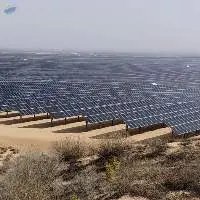
Primary Role: Main load-bearing structure for utility-scale and commercial PV plants on flat land, mountains, deserts, agrivoltaics, and coastal areas.
Service Life: Designed for 25â??30 years of operational safety against wind, snow, seismic loads, and thermal expansion.
Key Functions:
Secures tilt angle and orientation to maximize energy yield.
Resists external environmental forces and soil movement.
Provides clearance underneath (for farming, livestock, or drainage).
Uses prefabricated components to boost installation efficiency.
03. Special Application Systems & Structures
High-Elevation Agrivoltaic: 2â??4 m ground clearance for dual-use land management (farming/livestock + solar).
Slope-Adaptive Mountain: Designed for 10�°â??30�° uneven slopes; adjustable columns and optimized foundations minimize earthwork.
Vertical Bifacial: Installed vertically (~90�°) to enhance morning/evening energy production; ideal for agriculture, livestock, or fencing.
Structural Types:
Single-Post: Fewer foundations; better for high E-W slopes and rolling terrain.
Multi-Post: Spreads loads across multiple points; provides stiffness for flat sites with high wind/snow loads.
04. Material Comparison
Hot-Dip Galvanized Steel (Q235/Q355): Most common; high strength, excellent load resistance, cost-effective. Drawbacks: Heavy, needs extra protection in coastal zones.
Zinc-Aluminum-Magnesium (ZAM) Steel: Superior corrosion resistance in saline, humid, and coastal environments.
6063-T5 Aluminum Alloy: Lightweight with great corrosion resistance; lower strength requires structural optimization (best for lightweight, small-scale, or agrivoltaic projects).
Stainless Steel: Maximum durability and corrosion resistance; high cost; used mainly for critical hardware or extreme environments.
05. Key Design Parameters
Tilt Angle: 10�°â??35�° (Northern Hemisphere), optimized for latitude and yield.
Environmental Loads: Wind (e.g., EN 1991-1-4) and snow loads designed per local climate standards.
Connections: Standardized bolted connections over on-site welding.
Lifespan: 25â??30 years.
06. Foundation Types
Ground Screw: No concrete needed; fast installation, low environmental impact.
Concrete (Piles/Strip): High load capacity; best for soft soil, frozen ground, or high wind areas.
Driven Pile: Cost-effective steel piles driven directly into suitable soil.
Ballasted: Uses precast concrete blocks without ground penetration; ideal for rocky terrain or temporary sites.
07. Scenario Summary
Deserts & Flat Lands: Galvanized steel + Ground Screws / Concrete.
Mountainous Terrain: Slope-adaptive mounting + Adjustable structures.
Agrivoltaics & Livestock: High-elevation mounting systems.
Coastal / Corrosive Areas: ZAM coated steel or enhanced corrosion-resistant materials.