Please click here to check who's online and chat with them.

Find Verified Petroleum By Products Suppliers, Manufacturers and Wholesalers

Top Supplier Cities : Shenzhen   -   Guangzhou  
Jun-02-16
 Inquire Now  
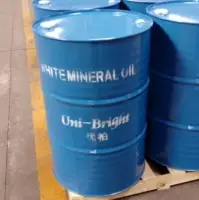
White Mineral Oil
Paraffin Oil

Skype:alicexfu2006
Cas No. 8042-47-5
Einecs No.232-455-8

Food Grade
Pharmaceutical Grade
Animal Vaccine
Cosmetic Grade
Technical Grade
Special Oil Is According To Customer's Request To Produce It.


Certificate : NSF, FDA , HALA, KOSHER, ISO9001, REACH
Jun-02-16

Liquid Paraffin Oil

$600 - $1.50K
MOQ: 1  Meters
Sample Available
 Inquire Now  
White Mineral Oil
Paraffin Oil

Skype:alicexfu2006
Cas No. 8042-47-5
Einecs No.232-455-8

Food Grade
Pharmaceutical Grade
Animal Vaccine
Cosmetic Grade
Technical Grade
Special Oil Is According To Customer's Request To Produce It.


Certificate : NSF,FDA ,HALA,KOSHER,ISO9001 ,REACH
Apr-06-16
 Inquire Now  
Our Production technology and methods:
We introduced Chevron Lummus Global LLC-FINISHING @technology along with its Nobel-Metal catalyst for high quality white mineral oil production within Asia-Pacific area since 2008, now KWYL has a white mineral oil refinery wiith a capacity of 200,000mt/a to supply all kinds of high quality white mineral oil for our customer. Tianjin Kaiwei Yongi United Chemical Co.,ltd 's White Mineral Oils are produced from highly pure paraffinic base oils through the newest refining process--- chevron Lummus Global LLC .have predominant number of saturated paraffinic hydrocarbons,60N,70N, 100N, 150N,220N,380N,600N.

Food Grade
Pharmaceutical Grade
Animal Vaccine
Cosmetic Grade
Technical Grade

CAS NO.8042-47-5
EINECS NO.232-455-8
H.S.CODE:27101993

CERTIFICATE:USP,NSF,FDA ,HALA,KOSHER,ISO9001 ,REACH

Appearance
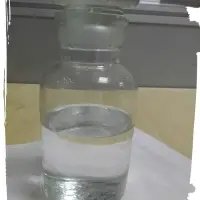
Colorless,Odorless,Tasteless/ transparent oil does no harm to the human body . without any additives, water or mechanical impurities, which is lubricating, raction, obtained from petroleum, that has been deeply refined. It possesses excellent antioxidation, chemical ,abrasive resistance and light stability.
May-11-16
 Inquire Now  
White mineral oil
Liquid paraffin oil

Pour point depressant

Cas no. 8042-47-5
Einecs no.232-455-8

Certificate:nsf,fda ,hala,kosher,iso9001 ,reach

Lamp oil is a good quality with smokeless and odorless. 

Appearance:

Colorless,odorless, tasteless/ transparent oil does no harm to the human body .  without any additives, water or mechanical impurities, which is lubricating, raction, obtained from petroleum, that has been deeply refined. It possesses excellent antioxidation, chemical ,abrasive resistance and light stability.


Food grade
Pharmaceutical grade
Animal vaccine
Cosmetic grade
Technical grade


Advantages:

White oil are common ingradients of pharmaceuticals,food and cosmetic.
Low pressure,short flow route,long life of catalyst and low investment would be chief advantages of process which could yield product with high color,antioxidation,and storage stability.

Tianjin kaiwei and yongli united chemical co.,ltd was found on the basis of chevron lummus global llc iso-finishing technology along with its nobel-metal catalystfor high quality white mineral oil production since 2008, now kwyl owns the biggest and most advanced white mineral oil refinery among asia-pacific area,as weel as its whole series of white mineral oil product.


Liquid paraffin are produced from highly pure paraffinic base oils through the newest process,have predominant number of saturated paraffinic hydrocarbons.
All are highly refine food grade and pharma grade white mineral oils that meets or exceeds uspnsf,fda certificate direct and indirect food&pharma contact application.

Certificate: nsf, fda,iso 9001, reach,halal,kosher

Main viscosity from no.Lp5 to no.Lp55,used for food,cosmetic and pharma...
Mar-03-09
Supplier From Tianjin, China
 Inquire Now
519 Petroleum By Products Suppliers
Short on time? Let Petroleum By Products sellers contact you.
VERIFIED
Jul-29-22
Supplier From Tianjin, Tianjin, China
 Inquire Now
Jun-12-20
Supplier From tianjin, tianjin, China
 Inquire Now
Dec-03-09
Supplier From Tianjin, China
 Inquire Now
Nov-17-09
Supplier From Tianjin, China
 Inquire Now
Mar-31-11
Supplier From Tianjin, China
 Inquire Now
May-24-12
Supplier From Tianjin, China
 Inquire Now
Dec-27-12
Supplier From Tianjin, China
 Inquire Now
Mar-06-17
Supplier From Tianjin, Tianjin, China
 Inquire Now
May-11-09
Supplier From Tianjin, China
 Inquire Now
Mar-03-10
Supplier From Tianjin, China
 Inquire Now
Jul-21-09
Supplier From Tianjin, China
 Inquire Now
Apr-06-17
Supplier From Tianjin, Tianjin, China
 Inquire Now
Sep-01-11
Supplier From Tianjin, China
 Inquire Now
Aug-09-23
Supplier From Tianjin, Teda, China
 Inquire Now
Oct-16-21
Supplier From Tianjin, , China
 Inquire Now
Jan-08-16
Supplier From Tianjin, China
 Inquire Now
Apr-30-10
Supplier From Tianjin, China
 Inquire Now
Jul-09-14
Supplier From Tianjin, China
 Inquire Now
Nov-06-19
 Inquire Now  
1.High molecular weight and narrow molecular weight distribution , without any low molecular substances.
2.High viscosity, good lubricity and transmission shear force.
3.Balance the lubrication and dispersion.
4.Low thermal weight loss and good thermal stability.
5.No migration and precipitation.
6.Through SGS,REACH,ROHS and other certification.
Jun-08-26

Microcrystalline Wax With Good Stability, 80#

$1 - $1 / Ton (US) (FOB)
MOQ: Not Specified
 Inquire Now  
Microcrystalline wax is a white, amorphous solid wax refined from petroleum residue oil. Its main components are C31-C70 branched-chain saturated hydrocarbons and a small amount of naphthenes. It features a high melting point, strong adhesion, excellent ductility, and low-temperature toughness. It is odorless and tasteless, insoluble in water and ethanol, but soluble in organic solvents such as benzene and chloroform.
Physical Form and Structure: A white or off-white waxy solid, amorphous with fine crystalline features,with a flexible texture that does not crack or break easily, and exhibits a luster when rubbed.Thermal Properties: Wide melting point range (typically 60-90C), good high-temperature stability, and low thermal expansion coefficient.
Mechanical Properties: High viscosity, strong ductility, and good elasticity; remains flexible at low temperatures and is not prone to cracking.
Jun-05-26

Ope Wax Used For Lubrication, 1

$1 - $1 / Ton (US) (FOB)
MOQ: Not Specified
 Inquire Now  
OPE wax is a plastic processing aid that provides both internal and external lubrication. It is widely used in the extrusion, injection molding, and calendering processes of thermoplastic resins such as PVC, PE, and PP to reduce melt viscosity, minimize equipment friction, improve demolding properties, and enhance the surface gloss of finished products.â??â??
â??Internal Lubrication: The polar groups of the molecules are partially compatible with the resin, reducing intermolecular friction, promoting plasticization, and reducing energy consumption.
External Lubrication: It migrates to the melt-metal interface to form a lubricating film, preventing roller/mold sticking, improving flow, and enhancing demolding efficiency. It performs exceptionally well in rigid PVC profiles, pipes, and cable compounds.
Balanced Lubricity: Compared to polyethylene wax, OPE wax introduces polar groups through oxidation, resulting in more balanced internal and external lubrication in polar systems and reduced tendency to bloom.
Jun-04-26

Micronized Wax For Leather Processing, 1

$1 - $1 / Ton (US) (FOB)
MOQ: Not Specified
 Inquire Now  
The core principle behind the use of micronized wax in leather processing is that it migrates to the leather surface during the coating and film-forming process, forming a micron-scale waxy protective layer. This reduces the coefficient of friction, enhances abrasion and scratch resistance, improves the hand feel, and boosts water-repellency and anti-adhesion properties.â??â??
Film Formation, Migration, and Surface Enrichment: During the drying or film-forming stage of leather finishing agents, micronized wax migrates to the surface due to differences in compatibility with the system, precipitating as fine crystals to form a wax-coated surface layer.
Lubrication and Scratch Resistanceâ??: The low surface energy of wax significantly reduces external contact friction, causing potential scratches to slip away rather than penetrate, thereby improving scratch resistance, abrasion resistance, and resistance to polishing.
Hand Feel Control: It provides a smooth, rich, or slightly velvety feel while avoiding stickiness; certain waxes can also adjust the finish to a matte or high-gloss effect.
Jun-03-26

Fischer Tropsch Wax With Wear Resistance, 1

$1 - $1 / Ton (US) (FOB)
MOQ: Not Specified
 Inquire Now  
Plastics and Polymers Processing
This is the market with the largest consumption of Fischer-Tropsch wax. It is primarily used as an external lubricant to prevent melted plastics (such as PVC) from sticking to processing equipment, resulting in a smoother and more glossy surface of the products.
Ink and paint
Here, Fischer-Tropsch wax primarily enhances the wear and scratch resistance of products, making printed materials and coatings more durable. It also provides slipperiness, enhancing the tactile experience, and prevents the coating surfaces from sticking to each other.
Adhesive and hot melt adhesive
Fischer-Tropsch wax is used to adjust viscosity, making hot melt adhesive easier to flow and spread during melting. At the same time, it can also control the curing speed, helping adhesives achieve rapid bonding.
Jun-02-26

Micronized Wax With Excellent Lubricity, 1

$1 - $1 / Ton (US) (FOB)
MOQ: Not Specified
 Inquire Now  
Micronized wax is primarily used in the coatings, inks, and plastics industries to provide wear resistance, lubrication, matting, and improved tactile feel.
Coatings and Inks: Used in powder coatings, industrial paints, and various types of inks to enhance scratch resistance and slip, as well as control gloss.

Plastics and Rubber: Acts as a lubricant and dispersant in plastic processing to improve flow; prevents high-temperature roller sticking in rubber applications.
What specific functions does it serve

Abrasion and Scratch Resistance: Disperses external forces like a microscopic buffer zone, reducing scratches and wear on coatings.

Lubrication and Demolding: Reduces the coefficient of friction, prevents product adhesion to molds, and facilitates demolding.
Matte Finish and Texture: Combined with matting agents to produce matte coatings, imparting a smooth, skin-like feel or fingerprint-resistant properties to the surface.
Jun-01-26

Micronized Wax With Good Dispersibility, 1

$1 - $1 / Ton (US) (FOB)
MOQ: Not Specified
 Inquire Now  
Micronized wax is a polymer additive widely used in coatings, inks, and other fields. It enhances the mechanical strength, tactile feel, and stain resistance of product surfaces. Its main advantages are reflected in the following aspects:
Improved Surface Mechanical Properties
Micronized wax imparts excellent abrasion resistance and scratch resistance to coatings. It reduces the surface coefficient of friction and forms a protective layer, making the coating smoother rather than more vulnerable when subjected to scratches a critical property in wood finishes, industrial coatings, and printing inks.
May-29-26

Micronized Wax In Printing Inks, 1

$1 - $1 / Ton (US) (FOB)
MOQ: Not Specified
 Inquire Now  
In printing inks, micronized wax primarily serve to enhance scratch resistance, abrasion resistance, and anti-blocking properties, while improving slip and providing moderate matting. They also aid in pigment dispersion and flow control.
Enhancing Scratch Resistance and Abrasion Resistanceâ??: Micronized wax (such as polyethylene wax and polytetrafluoroethylene wax) migrate to the surface after the ink film forms, creating a micro-rough layer that reduces the coefficient of friction and significantly improves the printâ??s resistance to scratches and abrasion.
â??Preventing Adhesion (Anti-Sticking): During stacking or high-speed web printing, wax migration reduces adhesion between printed sheets, which is particularly critical in high-temperature and high-humidity environments.
May-28-26

Micronized Wax Used As Lubricant In Plastic, 1

$1 - $1 / Ton (US) (FOB)
MOQ: Not Specified
 Inquire Now  
In plastic processing, micro-powder wax is primarily used as an internal lubricant and dispersant. It reduces melt viscosity, improves flowability, and enhances demolding properties and the surface finish of the final product.
Mechanism of Action Due to its fine particle size, micro-powder wax disperses uniformly in the plastic melt. Its internal lubrication reduces friction between resin molecular chains, while its external lubrication partially migrates to the surface to reduce adhesion to metal equipment; certain types (also significantly improve wear resistance and anti-slip properties.
Suitable Resins: Widely used in thermoplastic resins such as PVC, PP, PE, ABS, PC, TPU, and PA, with particularly outstanding results in color masterbatches, highly filled composites, and modified engineering plastics.
May-27-26

Micronized Pe Wax Used As Lubricant In Ink, 1

$1 - $1 / Ton (US) (FOB)
MOQ: Not Specified
 Inquire Now  
The main advantages of using micronized polyethylene wax in inks include: significantly improved scratch resistance and abrasion resistance, enhanced surface smoothness and slip, improved anti-blocking properties, minimal impact on gloss, and improved pigment dispersion. It is suitable for a wide range of ink systems, including solvent-based, water-based, and offset printing inks.â??â??
â??Excellent scratch resistance and abrasion resistanceâ??: After the ink film cures, the micropowder migrates to the surface, forming a micro-rough protective layer that effectively resists scratches and friction.
â??Smoothness and anti-stickingâ??: It reduces the coefficient of friction on the printed surface, preventing soiling or sticking of the reverse side when sheets are stacked, with particularly noticeable effects during high-speed printing and in high-temperature, high-humidity environments.
May-26-26

Ft Wax With Low Price For Candle Making, 1

$1 - $1 / Ton (US) (FOB)
MOQ: Not Specified
 Inquire Now  
Fischer Tropsch wax can be used in candle manufacturing, primarily as a substitute for paraffin or as a modifier to enhance gloss, reduce shrinkage, stabilize combustion, and minimize soot.

Appearance Enhancement: Fischer Tropsch wax improves the smoothness and gloss of candle surfaces and enhances color dispersion, making it suitable for decorative candles or those with high visual standards.

Reduced Deformation: Its narrow melting range and high crystallinity reduce cooling shrinkage, minimizing defects such as pitting and cracking, and improving yield.

Burning Performance: With low oil content and high purity, it burns more completely, producing a stable flame with minimal soot, making it suitable for nightlights or religious/emergency scenarios.
May-20-26

Fischer Tropsch Wax Candle Processing, 1

$1 - $1 / Ton (US) (FOB)
MOQ: Not Specified
 Inquire Now  
Fischer-Tropsch wax is the most widely used wax in the plastics industry, particularly excelling in the production of PVC products, where it significantly improves processing efficiency and product performance.
â??PVC Lubrication and Modificationâ??: As an external lubricant, Fischer-Tropsch wax reduces melt viscosity, increases extrusion speed, and produces smoother surfaces on pipes and profiles, while requiring 40%â??50% less than conventional PE wax.
â??Dispersion: In the production of color masterbatches and filler masterbatches, it aids in the uniform dispersion of pigments and fillers, preventing agglomeration.
â??Rubber Industry Protection: Used as a protective wax for rubber, it migrates to the surface to form a protective film, providing ozone resistance, anti-aging properties, and weather resistance, while also serving as a processing lubricant and release agent.
May-19-26

Microcrystalline Wax Used For Candle, 1

$1 - $1 / Ton (US) (FOB)
MOQ: Not Specified
 Inquire Now  
The principle behind the use of microcrystalline wax in candle manufacturing is primarily based on its unique physical and chemical properties, including a high melting point, low shrinkage rate, good flexibility, and compatibility with oil phases.
â??Reduced wax and oil dripping: Its low shrinkage rate and good ductility prevent shrinkage cracks or surface oil separation during the candle cooling process, making it particularly suitable for blending with plant-based waxes prone to oil separation, such as soy wax and coconut wax.
Enhanced surface smoothness and luster: Microcrystalline wax develops a luster through friction and has a pure white color, giving candles a translucent appearance reminiscent of cellophane, thereby enhancing the product's quality and appeal.
May-18-26

Micronized Wax Used For Leather Processing, 1

$1 - $1 / Ton (US) (FOB)
MOQ: Not Specified
 Inquire Now  
The Role of Micro-Powder Wax in Leather Processing
Improving Hand Feel: It significantly reduces the coefficient of friction on the leather surface, providing a smooth and soft feel, and is widely used in upholstery leather, garment leather, and shoe upper leather.
Enhancing Surface Properties: It improves the abrasion and scratch resistance of the coating, prevents inter-layer adhesion, and enhances the leatherâ??s water resistance, making it suitable for luggage and shoe leathers.
Creating Special Visual Effects: When used on distressed-style leathers such as Crazy Horse, it can produce a polished, color-changing effect through buffing; the gloss level of the coating can also be adjusted as needed to achieve a matte or high-gloss finish.
May-13-26

Micronized Wax Used As Lubricant, 1

$1 - $1 / Ton (US) (FOB)
MOQ: Not Specified
 Inquire Now  
In rubber processing, micro-powdered wax is primarily used as a processing aid and surface modifier. When added to rubber compounds, it significantly improves processing performance and ultimately enhances the service performance and surface quality of rubber products.
Improved Processing Performance: As an effective internal and external lubricant, it significantly reduces frictional resistance during the mixing, calendering, and extrusion processes, thereby minimizing equipment wear and improving mixing uniformity and extrusion rates.
Enhanced Product Abrasion Resistance: Wax microparticles disperse uniformly within the rubber, acting as micro-bearings that lower the surface friction coefficient of the finished product, significantly improving the abrasion and scratch resistance of rubber products.
May-12-26

Micronized Wax Used In Ink, 1

$1 - $1 / Ton (US) (FOB)
MOQ: Not Specified
 Inquire Now  
Micropowder wax is an ultra-fine powder widely used in various industrial sectors, including coatings, inks, plastics, leather, and cosmetics, primarily due to its excellent abrasion resistance, scratch resistance, slip properties, matting effect, and anti-blocking properties.
â??Coatings and Inksâ??
Enhances the abrasion resistance and scratch resistance of paint or ink filmsâ??â??
Improves tactile feel, reduces the coefficient of dynamic friction, and provides a velvety smooth textureâ??â??
Controls gloss levels and, when combined with matting agents, produces high-performance matte coatings/inksâ??â??
Prevents pigment settling and enhances dispersion stability
Plastics Processing
Used as an external lubricant and release agent to improve flow and surface finish
Used in color masterbatches, PVC pipes, injection-molded products, etc.
May-11-26

Micronized Wax Used For Demolding, 1

$1 - $1 / Ton (US) (FOB)
MOQ: Not Specified
 Inquire Now  
Micronized wax is used for demolding, primarily as an external release agent in the processing of polymer materials such as plastics, rubber, and coatings. By forming a lubricating film on the mold surface, it reduces the adhesion between the material and the mold, thereby ensuring smooth demolding, improving the surface finish of the finished product, and reducing the scrap rate.
â??Mechanism of Action of Micronized Wax in Demoldingâ??
Physical Barrier: Due to their fine particle size, micronized wax can be evenly distributed across the mold surface, forming a dense barrier layer.
Reduced Interfacial Friction: Their lubricating properties reduce resistance to melt flow, improving demolding fluidity.
Good Thermal Stability: Synthetic waxes, such as polyethylene wax and polypropylene wax, have high softening points and are resistant to decomposition or migration at high temperatures, making them suitable for engineering plastic processing.
May-09-26

Micronized Wax As Lubricant In Plastic, 1

$1 - $1 / Ton (US) (FOB)
MOQ: Not Specified
 Inquire Now  
Core Mechanism of Action and Application Advantages of Micropowder Wax as an External Lubricant:
Reduces frictional resistance and improves processing fluidity
Reduces torque and energy consumption: In processes such as extrusion and injection molding, micropowder wax reduces friction between the melt and the barrel and screw, thereby lowering plasticizing torque and processing energy consumption. Data shows that it can effectively reduce plasticizing torque and extend plasticizing time and thermal stability time.
Improving Product Surface Properties
Enhancing Gloss and Smoothness: The use of micro-powder wax prevents and overcomes sticking in films, pipes, and sheets, significantly improving the smoothness and gloss of finished products and enhancing their appearance.
May-06-26

Micronized Wax As Lubricant For Masterbatch, 1

$1 - $1 / Ton (US) (FOB)
MOQ: Not Specified
 Inquire Now  
Micronized wax is primarily used as a highly effective dispersant in colour masterbatches. Its role and mechanism of action in colour masterbatches are as follows:
Core role: Highly effective dispersant
Mechanism of action: With a particle size similar to that of the pigment, it effectively isolates and wets the pigment particles, preventing their re-agglomeration.
Practical benefits: Improves pigment dispersion and tinting strength, reduces pigment consumption and costs, whilst minimising filter screen blockages.
Core role: Processing aid
Mechanism of action: Reduces the viscosity of the polymer melt, improving the flow properties of the compound during processing.
Practical benefits: Enhances production efficiency, reduces energy consumption during processing, and ensures smoother production.
Apr-30-26

Refined Ft Wax For Hot Melt Adhesive, 1

$1 - $1 / Ton (US) (FOB)
MOQ: Not Specified
 Inquire Now  
Fischer-Tropsch wax is a high-performance viscosity modifier, primarily used to regulate flow properties, fast-drying characteristics (i.e. shortening the open time) and heat resistance.
Regulating flow and wetting properties: Fischer-Tropsch wax has extremely low viscosity at high temperatures, significantly improving the flow properties of the adhesive. This helps the hot-melt adhesive to penetrate and wet the surface of the substrate more effectively, thereby forming a stronger bond.
Reducing curing time: With a high pour point and narrow carbon distribution, Fischer-Tropsch wax shortens the time taken for hot-melt adhesives to transition from a molten to a solid state, achieving fast drying. This is crucial on high-speed packaging production lines, as it prevents the adhesive from being ejected before it has dried.
Apr-28-26

Micronized Wax Used For Plastic, Coating, 1

$1 - $1 / Ton (US) (FOB)
MOQ: Not Specified
 Inquire Now  
The Key Role of Micropowder Wax in Plastics Processing
Improving processing performance: Acting as an internal and external lubricant during extrusion or injection moulding, it reduces friction between the material and the equipment, as well as between the material molecules themselves. This lowers the plasticising torque, thereby reducing energy consumption during processing, improving moulding efficiency and output, and ensuring smoother demoulding.
Enhancing Product Surface Quality: It migrates to the surface of the finished product to form a thin lubricating layer, significantly reducing the surface coefficient of friction to provide a smooth, silky feel. It also imparts a higher surface gloss and effectively prevents products from sticking together when stacked.
Acts as an excellent dispersant: Particularly when used in colour masterbatches and filler masterbatches, it effectively encapsulates pigment and filler particles, preventing agglomeration, ensuring more uniform colour distribution, and reducing defects such as colour spots or streaks on the product surface.
Apr-27-26

Micronized Pp Wax Used In Pigment Processing, 1

$1 - $1 / Ton (US) (FOB)
MOQ: Not Specified
 Inquire Now  
Polypropylene wax primarily acts as a dispersant and processing aid in pigment processing, playing a particularly crucial role in the production of high-quality colour masterbatches, coatings and inks.
Excellent dispersing properties: During pigment processing, polypropylene wax rapidly wets the surface of pigment particles, effectively preventing agglomeration and thereby achieving a stable, uniform dispersion.
High compatibility with polypropylene (PP) systems: When pigments are ultimately used in PP plastic products (particularly fibres and films), the use of polypropylene wax as a dispersant offers a decisive advantage. This is because its chemical structure is identical to that of the PP matrix, ensuring excellent compatibility.
Apr-14-26

Microcrystalline Wax 80# Used As Lubricant, 80#

$1 - $1 / Ton (US) (FOB)
MOQ: Not Specified
 Inquire Now  
Microcrystalline wax can be used as a lubricant, with its applications primarily falling into the following categories:
As a thickening agent for greases: Microcrystalline wax possesses good gel strength and adhesion, and is commonly used as a thickening agent in the manufacture of greases for instrumentation and sealing, as well as in petrolatum-based products, effectively regulating the consistency and stability of the grease.
Direct use as an industrial lubricant: Microcrystalline wax reduces friction between mechanical components, protects metal surfaces and extends equipment lifespan, whilst also offering some rust-preventive properties.
Blending with other materials: Microcrystalline wax can be mixed with paraffin wax, mineral oil and other substances to improve lubrication performance; it is widely used as a processing aid in the rubber, plastics and textile industries.
Apr-13-26

Wax 80 Used In Plastic And Rubber Processing, 80#

$1 - $1 / Ton (US) (FOB)
MOQ: Not Specified
 Inquire Now  
Microcrystalline wax is primarily used as a functional additive in rubber and plastics processing to improve the processing properties of the material and the physical properties of the final product.
â??Role in rubber processingâ??
â??Enhancing weather resistance and anti-ageing propertiesâ??: After vulcanisation, microcrystalline wax slowly migrates to the surface of the rubber, forming a dense, continuous physical protective film that effectively blocks the erosion of rubber molecular chains by ozone, oxygen and ultraviolet light, thereby delaying cracking and ageing.
Role in plastics processing:
Optimising flow properties: Acting as an internal lubricant, it reduces the viscosity of the plastic melt, improving mould filling and demoulding properties.
Enhancing surface quality: It increases the gloss, abrasion resistance and anti-adhesion properties of the finished product, and is widely used in electronic product casings, packaging materials and similar applications.
Apr-09-26

Wax Used In Anti-Corrosion Protection, 80#

$1 - $1 / Ton (US) (FOB)
MOQ: Not Specified
 Inquire Now  
Microcrystalline wax offers anti-corrosion protection, primarily through its physical barrier properties and chemical stability.
Mechanisms of anti-corrosion protection and applications
Formation of a dense protective film: Microcrystalline wax forms a continuous, dense, hydrophobic film on the surfaces of substrates such as metal, concrete or rubber, effectively preventing the ingress of corrosive agents such as moisture, oxygen, acids, alkalis and salts.
Anti-ageing for rubber and metal:
Used as a rust inhibitor in metal surface treatment to provide moisture-proof and anti-corrosion protection.
Corrosion protection in packaging and coatings: Used in food packaging, paper impregnation and fruit coatings to enhance moisture-proof and anti-penetration properties, thereby extending shelf life.
Apr-08-26

Ft Wax Used In Candle For Increasing Hardness, 1

$1 - $1 / Ton (US) (FOB)
MOQ: Not Specified
 Inquire Now  
Fischer-Tropsch wax offers several significant advantages when used in candles:
Aesthetic benefits
Enhanced lustre: Fischer-Tropsch wax makes the candle surface smoother and ensures more uniform colour distribution, resulting in a bright visual effect during combustion, making it particularly suitable for decorative candles.
Reduced shrinkage and deformation: Its stable molecular structure minimises shrinkage during cooling, reducing the likelihood of dents or unevenness and improving yield.
Burning performance benefits
Extended burn time: With a high carbon content and stable combustion, it is suitable for scenarios requiring prolonged burning, such as religious ceremonies or emergency lighting.
Apr-07-26

Ft Wax Used In Plastics: Injection Moulding, 1

$1 - $1 / Ton (US) (FOB)
MOQ: Not Specified
 Inquire Now  
Fischer-Tropsch wax is widely used in plastics processing, particularly in industries such as injection moulding, extrusion and pelletising.
1. Main Functions
Internal lubricant: Reduces intra-molecular friction in the plastic melt, improves flowability, and reduces torque and energy consumption.
External lubricant: Reduces friction between the melt and the surfaces of metal equipment (barrels, screws, moulds), prevents adhesion, and improves demoulding performance.
Dispersant: Helps pigments and fillers (such as calcium carbonate and talc) disperse evenly within the resin, preventing agglomeration.
2. Specific Applications
Injection Moulding: Improves melt flow index, reduces injection pressure, minimises mould fouling, enhances demoulding efficiency, and produces smoother product surfaces.
Extrusion: Reduces extruder current, minimises material build-up at the die, and improves output and dimensional stability.
Pelletising: In masterbatches, aids pigment wetting and dispersion, and reduces filtration pressure drop.
519 Petroleum By Products Suppliers
Short on time? Let Petroleum By Products sellers contact you.
See what buyers and suppliers are discussing in Petroleum By Products import export community